
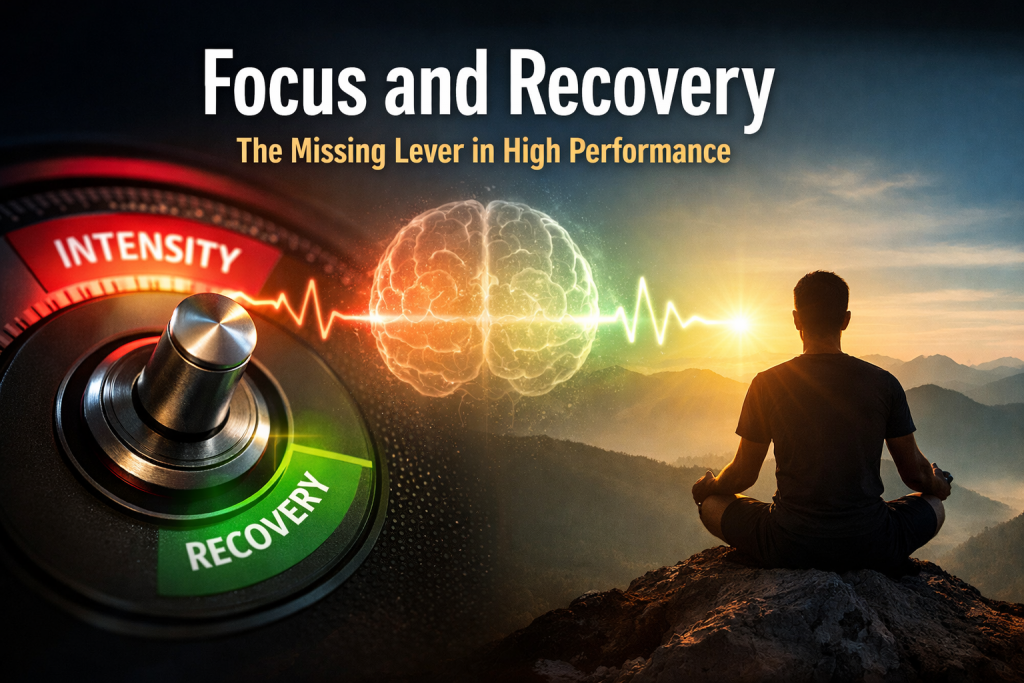
Digital illustration of the intended design and atmosphere. Final layouts and finishes may vary
Focus Is the Missing Performance Lever. Why Recovery Determines Energy, Clarity, and LFocus and recovery determine performance long before effort, motivation, or discipline begin to fail.ngevity
Focus shapes every high-performance lifestyle.
Many professionals believe progress comes from more effort. Longer hours. Harder training. Tighter schedules. At first, results improve. Over time, performance flattens. Energy drops. Decision quality weakens. Focus fragments. This decline rarely comes from lack of discipline. It comes from lack of recovery.
This article explains why focus depends on recovery more than intensity, and why structured recovery environments now define sustainable high performance.
Focus Declines Before Burnout Appears:
Burnout rarely arrives suddenly. Focus erodes first. Professionals still show up. Training continues. Output looks acceptable from the outside. Internally, clarity fades. Simple decisions take longer. Irritability rises. Attention drifts. These are early signals of nervous system overload.
Focus acts as an early warning system. When focus slips, recovery quality has already declined.
Focus Is a Nervous System Output
Focus is not a personality trait. It is not a mindset trick. Focus reflects nervous system state.
When the nervous system stays activated for long periods, attention narrows. Patience shortens. Cognitive flexibility declines. Even strong habits lose effectiveness. When the system regulates properly, focus stabilizes without effort.
High performers often train discipline while ignoring regulation. This imbalance creates invisible strain.
Why Effort Without Recovery Creates Noise
Modern lifestyles keep the nervous system stimulated all day. Messages. Meetings. Travel. Shared environments. Screens. Even leisure includes stimulation.
The system remains alert long after activity ends. Sleep masks the issue but does not resolve it. The next day begins with less cognitive reserve. Focus weakens incrementally.
More effort adds noise. Recovery removes noise.
Recovery Is Not Rest
Many people confuse recovery with inactivity. Sitting. Scrolling. Passive downtime. These do not restore focus.
True recovery shifts the nervous system from alert to regulated. It reduces sensory input. It restores internal rhythm. This process requires the right conditions, not motivation.
Focus returns when stimulation drops.
Why Quiet Environments Restore Focus Faster
Noise forces the brain to filter constantly. Filtering consumes energy. Even background noise increases cognitive load.
Quiet environments remove the need to filter. The brain stops scanning. Breathing slows. Muscles release. Focus strengthens naturally.
Silence is functional, not aesthetic.
Why Privacy Restores Focus Faster
Privacy reduces social monitoring. In shared spaces, the nervous system tracks movement, sound, and presence. This keeps awareness outward.
Private environments signal safety. Vigilance drops. Internal regulation resumes. Focus returns faster without conscious effort.
Privacy is a performance tool.
Why High Performers Plateau
Plateaus rarely indicate limits of ability. They indicate limits of recovery.
Training intensity remains high. Work demands remain high. Recovery quality declines. Focus weakens first. Energy follows. Motivation declines last.
By the time motivation suffers, the system has been overloaded for months.
Decision Fatigue Accelerates Focus Loss
Every decision draws from cognitive reserves. Crowded environments increase micro decisions. Where to stand. Who is nearby. What to ignore. What to filter.
These decisions drain focus quietly. By the end of the day, clarity disappears even without physical fatigue.
Simplified environments preserve focus by reducing decision load.
Environment Shapes Recovery Quality
Recovery does not depend on willpower. It depends on space.
Shared spaces keep awareness outward. Private spaces allow awareness to settle. Predictable environments reduce vigilance. Focus responds immediately to environmental cues.
High performers underestimate this effect.
Focus Requires Containment
Containment reduces scanning behavior. The brain stops tracking threats. Muscles release. Breathing slows.
Focus stabilizes when the nervous system no longer anticipates interruption.
This is why recovery works better in spaces designed for it.
Why Gyms and Offices Miss the Mark
Gyms prioritize exertion. Offices prioritize output. Few spaces prioritize regulation.
High performers need environments designed for nervous system recovery. Not stimulation. Not productivity. Regulation.
Without these spaces, recovery remains incomplete.
The Cost of Ignoring Recovery
When recovery is neglected, performance fluctuates. Training feels inconsistent. Work quality varies. Emotional tolerance shrinks. Sleep loses depth.
These patterns compound. Focus becomes unreliable. Confidence erodes.
Recovery protects consistency.
Focus and Leadership Quality
Leadership depends on focus. Clear judgment. Emotional regulation. Decision speed.
When focus declines, leaders become reactive. Decisions feel heavier. Risk tolerance shifts. Communication quality drops.
Recovery restores leadership clarity before burnout appears.
Focus and Physical Training
Nervous system fatigue affects coordination, strength expression, and injury risk. Poor recovery increases error rates. Movements feel sloppy. Strength fluctuates.
Improved recovery enhances training efficiency. Fewer sessions produce better outcomes. Focus improves motor control.
Recovery multiplies effort.
Why Rhythm Matters
Recovery improves when predictable. Irregular schedules keep the nervous system alert. Consistent routines signal safety.
Daily rhythm supports regulation. Focus rebuilds through repetition, not intensity.
How High Performers Adjust
High performers reduce stimulation, not ambition.
They protect space. They simplify routines. They schedule recovery with the same discipline as work and training.
Focus improves when recovery becomes non-negotiable.
Recovery as a Daily Practice
Short daily resets outperform occasional breaks. Consistency matters more than duration.
Ten minutes of true regulation daily restores more focus than sporadic long breaks.
Frequency beats intensity.
What Effective Recovery Looks Like
Quiet rooms. Controlled temperature. Minimal visual input. No screens. No conversation.
Simple cues signal rest. The nervous system responds quickly.
Recovery does not require complexity.
Why Shared Spaces Fail Recovery
Shared spaces increase vigilance. The nervous system remains partially alert. Recovery remains incomplete.
Focus improves only when alertness drops fully.
Focus Returns Before Motivation
When recovery improves, focus stabilizes first. Motivation follows naturally. Discipline feels lighter.
This sequence matters. Chasing motivation delays recovery.
Recovery Protects Longevity
Long term performance depends on system stability. Short bursts of intensity feel productive. Years of unmanaged stress shorten careers.
Focus degradation predicts decline before health issues appear.
Recovery preserves longevity.
Why Premium Performance Spaces Prioritize Recovery
High end environments remove friction. They reduce choices. They eliminate noise. They protect energy.
This is not luxury. This is function.
Focus thrives in simplicity.
Why This Matters Now
Modern work and fitness blur boundaries. Stimulation never stops. Recovery requires intention and design.
Those who adapt sustain performance. Those who ignore recovery burn out quietly.
The Future of High Performance
Performance environments will prioritize regulation. Recovery will sit alongside training and work.
Focus will replace intensity as the key metric.
Focus at The Leela Vida
At The Leela Vida, recovery is integrated into daily life. Quiet spaces. Private environments. Predictable rhythm.
Recovery supports work and training equally.
Focus as a Design Principle
Spaces reduce stimulation. Recovery becomes accessible. Focus stabilizes.
The result is steady energy. Clear thinking. Consistent performance.
Focus Reveals the Truth
Performance does not fail from lack of effort.
It fails from lack of recovery.
Recovery restores focus.
Focus restores performance.
This is the missing lever.
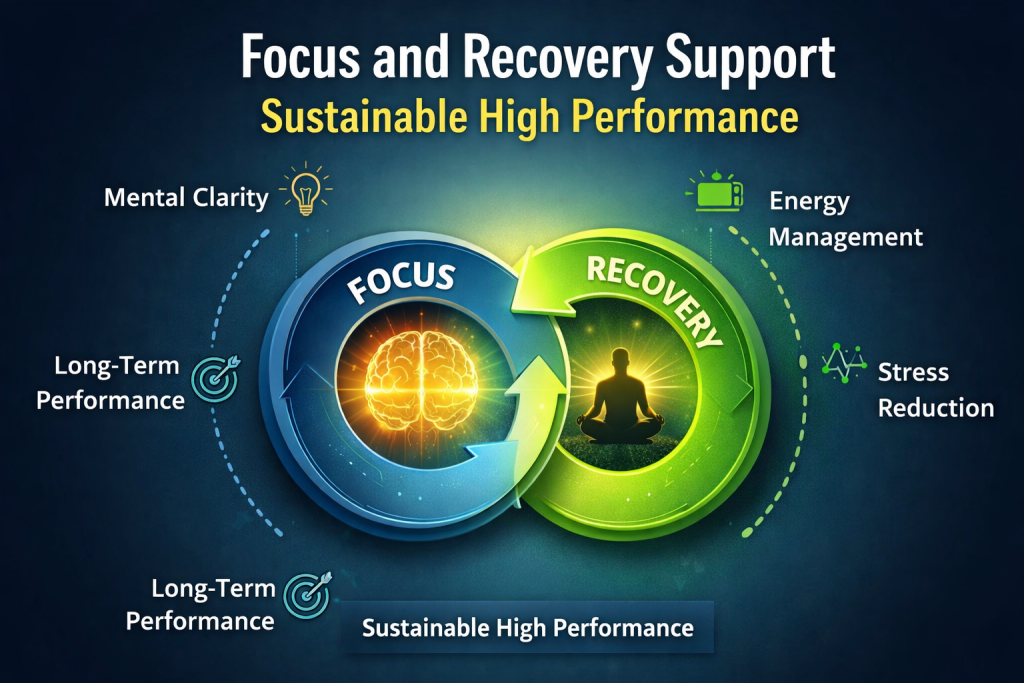
Digital illustration of the intended design and atmosphere. Final layouts and finishes may vary
Sources:
- Harvard Business Review. The Making of a Corporate Athlete
- https://hbr.org/2001/01/the-making-of-a-corporate-athlete
- Harvard Business Review. Managing Energy, Not Time, Is the Key to High Performance
- https://hbr.org/2007/10/manage-your-energy-not-your-time
What is focus and recovery in high performance?
Focus and recovery describe how mental clarity and nervous system regulation support consistent energy, better decisions, and long term performance.
Why does focus decline even when discipline stays strong?
Focus declines when recovery quality drops. Effort remains high, but ongoing stimulation prevents the nervous system from regulating.
How do focus and recovery affect decision making?
Focus and recovery protect cognitive energy. When recovery improves, decisions become clearer, faster, and more consistent.
How does The Leela Vida support focus and recovery?
The Leela Vida supports focus and recovery through private spaces, quiet environments, and structured recovery areas designed to reduce stimulation and restore nervous system balance.
Can better recovery improve physical training results?
Yes. Improved recovery enhances coordination, consistency, and output. Focus improves movement quality and reduces performance variability.