
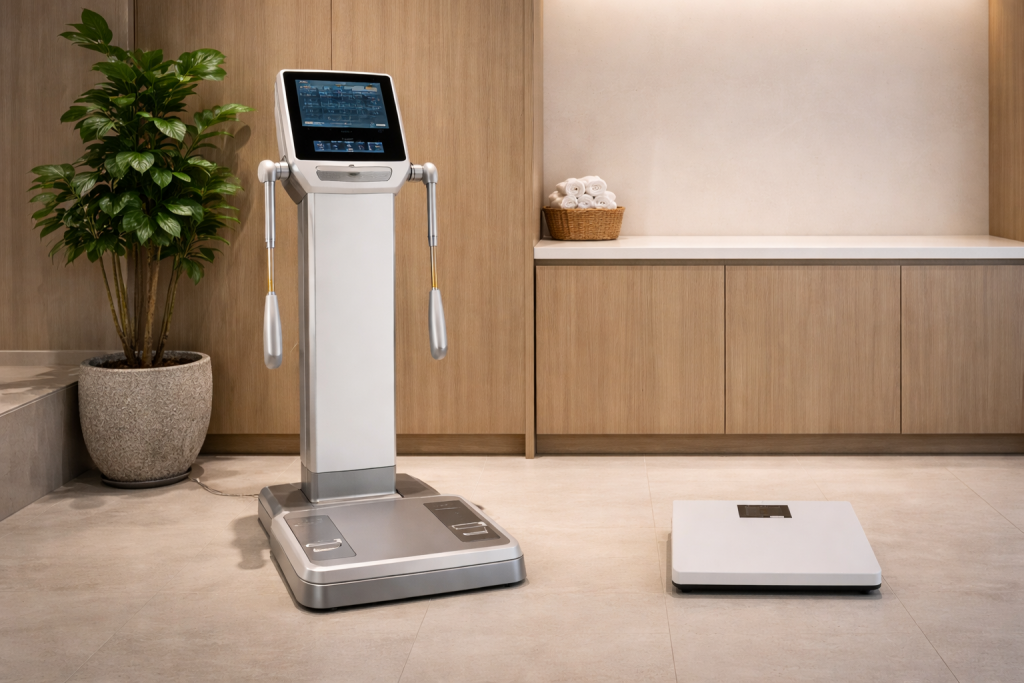
Digital illustration of the intended design and atmosphere. Final layouts and finishes may vary
High-performing professionals make important decisions every day. They rely on judgment, experience, and instinct in many areas of their work, yet when it comes to health and performance, instinct alone is often misleading. Energy levels fluctuate. Motivation changes. Stress alters perception. A demanding week can make someone feel strong even while recovery is declining, while a single poor night’s sleep can create the impression that progress has disappeared altogether. Feelings provide useful feedback, but they rarely present the complete picture. Sustainable performance depends on understanding what is actually happening beneath the surface rather than reacting to temporary emotions. This is why professionals who consistently perform at a high level place increasing value on objective measurement. Data provides clarity where emotion creates uncertainty, allowing decisions to remain stable even when daily feelings change.
Why Feelings Often Mislead Performance
The human body constantly responds to stress, sleep, nutrition, hydration, workload, and countless other variables. These changes influence how we feel, but feelings rarely reflect the true state of recovery or physical adaptation. Someone may feel energetic after several coffees despite carrying significant sleep debt. Another person may feel tired after an intense training session while making excellent physiological progress. Hormones, stress, and daily pressures all influence perception, making it difficult to judge performance accurately through emotion alone.
Objective measurement removes much of this uncertainty. Instead of relying on temporary sensations, it identifies patterns that develop over weeks and months. Those patterns provide a far more reliable foundation for decision-making. When professionals understand how their bodies are adapting over time, they become less likely to overreact to isolated good days or bad days. They make adjustments based on evidence rather than mood, creating greater consistency in both training and professional performance.
Why Reactive Decisions Slow Progress
Many people unknowingly allow their daily feelings to determine how they train. If they feel energetic, they increase intensity. If they feel tired, they cancel the session altogether. While this approach appears logical, it often creates cycles of overtraining followed by excessive recovery, making long-term progress far less predictable.
High performers benefit from a different approach. Rather than reacting to temporary fluctuations, they monitor trends over time. Objective data allows them to identify gradual changes before they become problems. Recovery can be adjusted before fatigue begins affecting performance. Training loads can increase when the body is genuinely prepared rather than simply feeling motivated. This structured approach removes much of the guesswork from physical performance and helps maintain consistent progress throughout demanding periods.
The Metrics That Matter Most
One of the biggest misconceptions surrounding performance tracking is that everything must be measured. In reality, the opposite is often true. High performers usually monitor a relatively small number of meaningful indicators rather than collecting endless data.
Body composition provides far greater insight than body weight alone. Lean muscle mass, body fat percentage, hydration status, balance between the left and right sides of the body, and long-term trends reveal how the body is adapting far more accurately than the number displayed on a scale. These measurements allow professionals to distinguish between genuine progress and temporary fluctuations caused by hydration, inflammation, or normal daily variation.
By concentrating on meaningful indicators instead of countless statistics, professionals simplify decision-making while improving its quality.
Why Body Weight Tells Only Part of the Story
Many people continue to judge their progress almost entirely by body weight. While easy to measure, weight alone provides very little useful information about physical performance. Two people can weigh exactly the same while having completely different levels of muscle mass, body fat, hydration, and overall health.
Even for the same individual, body weight changes throughout the day due to fluid balance, food intake, and other temporary factors. A lower number on the scale does not necessarily indicate better health, just as a stable weight does not guarantee positive progress.
Body composition analysis provides a much more complete picture. It shows whether muscle is being gained or lost, whether body fat is changing appropriately, and whether hydration levels remain supportive of both training and cognitive performance. This allows professionals to make thoughtful adjustments instead of reacting emotionally to temporary changes on the scale.
Recovery Is Measured, Not Assumed
Many professionals underestimate how closely recovery influences mental performance. The brain depends on the same recovery processes as the muscles. When recovery declines, concentration becomes more difficult, reaction times slow, emotional resilience decreases, and important decisions require greater effort.
These changes are often blamed on workload or stress alone when, in reality, the body may simply require additional recovery. Objective measurement helps identify these patterns before they begin affecting professional performance. Instead of waiting until fatigue becomes overwhelming, professionals can recognise early signs of excessive strain and make appropriate adjustments to training, workload, or recovery strategies.
This approach protects both physical health and cognitive performance because problems are addressed while they remain small rather than after they have already disrupted daily life.
Building Long-Term Clarity Through Measurement
The greatest value of performance data comes from observing long-term trends rather than isolated results. One individual assessment provides useful information. A series of assessments completed consistently over many months provides something far more valuable: direction.
Professionals begin to understand how their bodies respond to different training programmes, nutritional strategies, travel schedules, and periods of increased work pressure. Recovery becomes easier to manage because changes are identified early. Progress becomes easier to maintain because adjustments are based on objective evidence rather than temporary feelings.
Over time, this creates a level of confidence that cannot be achieved through guesswork alone. Decisions become calmer, more precise, and more consistent because they are supported by reliable information.
How The Leela Vida Supports Measured Performance
The Leela Vida has been designed around the belief that meaningful progress should be measured rather than assumed. Members have access to advanced body composition technology that provides objective insight into physical adaptation over time, allowing progress to be monitored with accuracy instead of relying solely on appearance or body weight. Regular assessments create a clear picture of how training, nutrition, and recovery are working together, making it easier to identify trends and make informed adjustments before small issues become larger problems.
Measurement does not exist in isolation. It forms part of a complete performance system where training, body composition analysis, recovery, healthy nutrition, and focused work are integrated within one carefully managed environment. Members are able to train, measure progress, recover, and continue productive work without unnecessary travel or disruption. This continuity reduces decision fatigue while making healthy routines easier to maintain over the long term.
Precision Always Outperforms Guesswork
Feelings will always play a role in how we experience training and performance. They provide valuable feedback, but they should not become the sole basis for important decisions. Professionals who consistently perform at a high level understand that long-term success depends on balancing instinct with objective information.
When progress is measured accurately, unnecessary emotion disappears from the process. Decisions become more consistent. Adjustments become more precise. Confidence grows because actions are supported by evidence rather than assumptions.
That is the real value of measurement.
It replaces uncertainty with clarity and allows high performers to improve with intention rather than hope.