
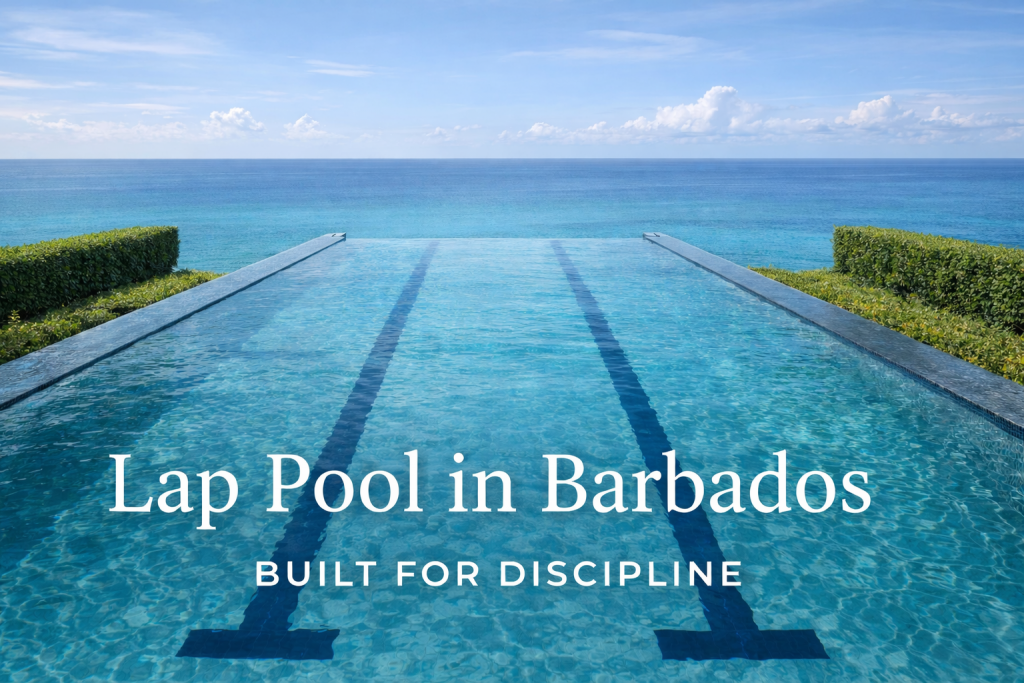
Illustration for conceptual purposes. Actual facilities and experiences at The Leela Vida may vary.
Why a Dedicated Lap Pool Matters More Than a Leisure Pool
Swimming is one of the most effective forms of exercise available, yet the environment in which it takes place determines whether it becomes part of a long-term routine or simply an occasional activity. Most pools in Barbados are designed primarily for relaxation. They are ideal for cooling off, spending time with family, or enjoying the outdoors, but they are not designed for structured training. Wide open spaces, varying depths, and unrestricted movement make it difficult to establish rhythm or measure progress. Swimmers constantly adjust to other people, change direction unexpectedly, or interrupt their pace. For professionals who value consistency, these interruptions gradually reduce the appeal of swimming as a serious training tool. The problem is not swimming itself. The problem is that most leisure pools are not designed to support disciplined performance.
Why Pool Design Influences Performance
A dedicated lap pool changes the entire experience because it has a different purpose from the moment it is designed. Rather than prioritising recreation, every element supports structured movement. Clearly defined lanes encourage consistent pacing. The layout naturally creates direction and rhythm, allowing swimmers to maintain uninterrupted intervals without constantly changing course or avoiding other users.
This structure transforms swimming from casual exercise into measurable training. Progress becomes easier to track because distance, pace, and endurance can all be repeated under consistent conditions. Like any well-designed training environment, the pool encourages routine rather than improvisation. The body responds positively to this predictability, gradually adapting to repeated effort while improving cardiovascular fitness, muscular endurance, and overall conditioning.
Why Pool Length Matters
The length of a lap pool plays an important role in the quality of training. Short pools require frequent turns that interrupt breathing patterns and reduce the opportunity to establish a natural rhythm. Every turn briefly breaks momentum, making longer intervals more difficult to sustain.
A 50-foot lap pool provides a far more effective balance between space and practicality. Swimmers have sufficient distance to settle into a consistent stroke pattern, regulate breathing, and maintain steady effort before turning. This creates smoother training sessions where endurance, pacing, and technique can be developed more effectively over time.
Rather than feeling like a recreational swim, each session becomes purposeful. Warm-ups, interval training, recovery laps, and endurance work all fit naturally within the same environment, allowing members to follow structured programmes that produce measurable improvement.
Environment Builds Discipline
Many people believe discipline comes entirely from personal motivation. In reality, the environment plays an enormous role in determining whether healthy habits are maintained. Well-designed environments reduce unnecessary decisions and encourage consistent behaviour almost automatically.
A dedicated lap pool follows this principle. Members arrive, enter their lane, begin their session, complete their programme, and finish without unnecessary interruption. There is very little uncertainty because the environment has already established the structure.
This simplicity encourages consistency. Training becomes something that naturally fits into the day instead of requiring constant planning or adjustment. Over time, the routine becomes easier to maintain because the environment supports it rather than competing against it.
Swimming Becomes Part of a Complete Performance System
Swimming offers significant cardiovascular and muscular benefits on its own, but its value increases substantially when it forms part of an integrated performance routine. Following a structured swim session with recovery therapies allows the body to transition efficiently from physical stress into recovery.
Cold water immersion helps reduce inflammation after demanding training. Heat therapy encourages circulation and muscular relaxation. Red light therapy supports cellular recovery and tissue repair. Together, these elements create a complete training cycle where exercise and recovery support one another instead of existing as separate activities.
For busy professionals, this integration is particularly valuable. Rather than organising multiple appointments across different locations, everything happens within one carefully designed environment. Time is saved, routines become easier to maintain, and recovery becomes part of the training process rather than something postponed until later.
The Mental Benefits of Structured Swimming
Swimming in a dedicated lap pool creates benefits that extend beyond physical fitness. The repetitive rhythm of controlled breathing, consistent movement, and uninterrupted laps encourages a level of mental focus that is increasingly difficult to achieve during a busy working day.
For many professionals, this becomes an opportunity to disconnect from constant digital stimulation while remaining physically active. The structured nature of lap swimming encourages concentration without requiring constant decision-making. Attention narrows naturally towards breathing, movement, and pacing, allowing the mind to settle while the body continues working.
This combination of physical effort and mental clarity explains why swimming remains one of the preferred forms of exercise for many executives, entrepreneurs, and professionals seeking sustainable performance over the long term.
A Different Standard for Aquatic Training
A dedicated lap pool naturally feels different from a recreational swimming pool. The atmosphere is calmer, the purpose is clearer, and every aspect of the environment encourages structured movement rather than casual activity. This is not intended to reduce enjoyment. Instead, it reinforces the idea that the space exists to support consistent training and measurable progress.
The quieter atmosphere also complements the wider philosophy of a luxury fitness center designed around focus, efficiency, and long-term performance. Members are able to train without unnecessary interruption, maintain their routines more consistently, and integrate swimming into a broader programme that includes strength training, recovery, and healthy nutrition.
Why The Leela Vida Chose This Approach
The lap pool at The Leela Vida has been designed as part of a complete performance environment rather than as a leisure feature. Its purpose is to support structured aquatic training that complements strength training, recovery therapies, and professional productivity within the same location.
Like every other element of The Leela Vida, the pool reflects a simple philosophy. Environments shape behaviour. When an environment encourages consistency, healthy habits become easier to maintain. When those habits are repeated over time, they produce meaningful results.
The lap pool is therefore much more than another facility.
It represents the belief that health is built through rhythm, structure, and consistency rather than occasional bursts of effort.
For professionals who approach their wellbeing with the same discipline they bring to their careers, that distinction makes all the difference.