
Recovery for High Performers That Holds Up
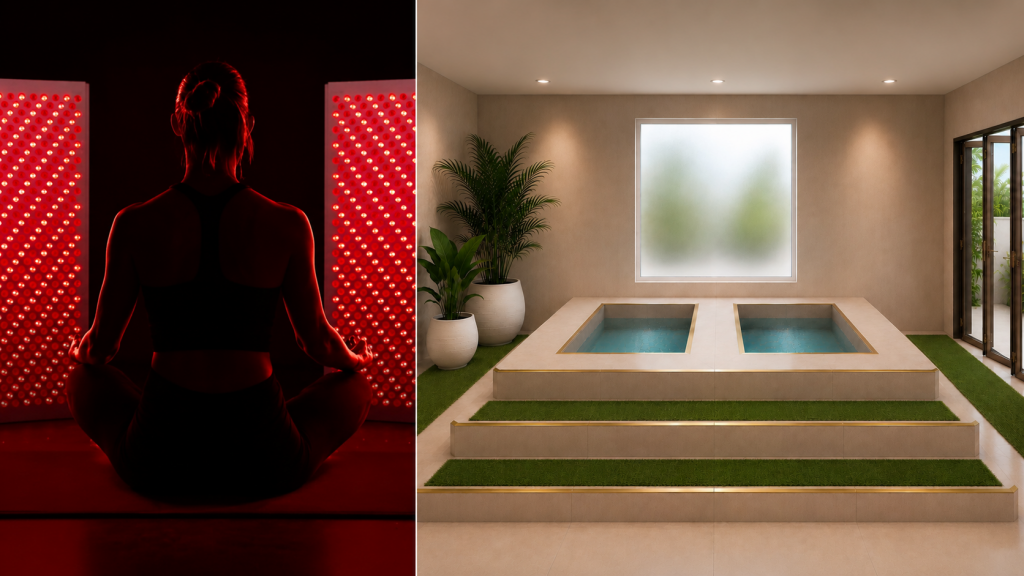
Recovery for high performers is not downtime. It is structured input that protects clarity, output, and long-term physical capacity.
Recovery for High Performers That Holds Up Read More »
Recovery for high performers is not downtime. It is structured input that protects clarity, output, and long-term physical capacity.
Recovery for High Performers That Holds Up Read More »
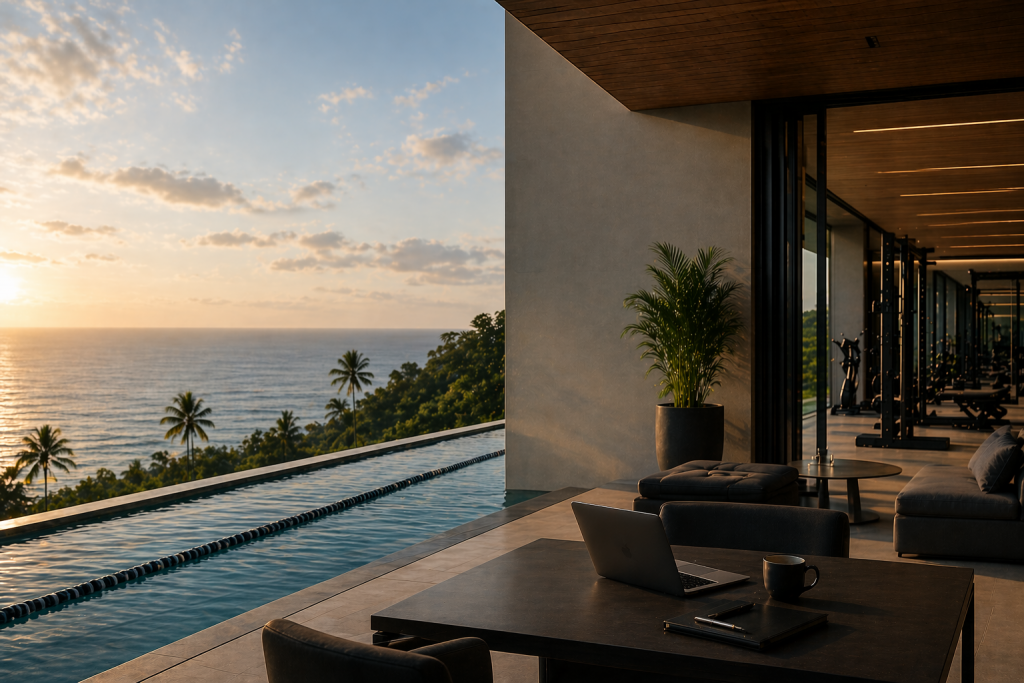
A private members club for professionals offers structure, privacy, and performance support for work, training, recovery, and daily clarity.
Private Members Club for Professionals Read More »
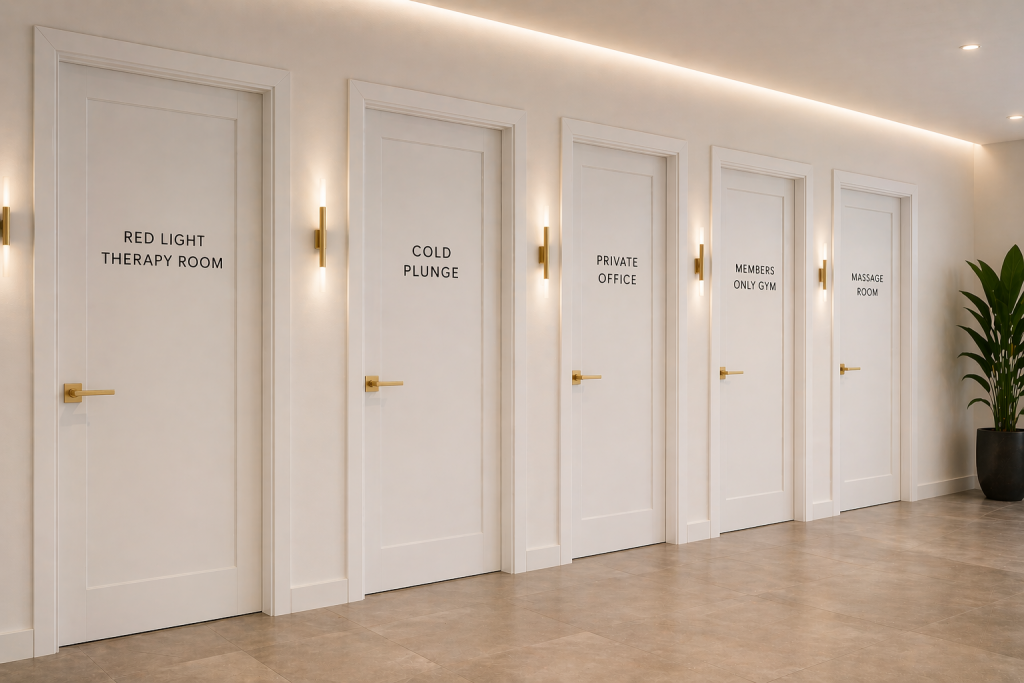
A private wellness club Barbados professionals use should support training, recovery, work, and nutrition in one calm, structured setting.
Private Wellness Club Barbados: What Matters Read More »
Illustration for conceptual purposes. Actual facilities and experiences at The Leela Vida may vary. Section 1. Motivation Fails. Structure Wins Most people rely on motivation. High performers rely on structure. Motivation fluctuates. Biology does not. Your energy, focus, and recovery follow predictable cycles driven by circadian rhythm, cortisol, and glucose stability. When your day is unstructured, performance becomes random. When your day is structured, performance becomes repeatable. The Leela Vida model is built on this principle. It removes decision fatigue and replaces it with a controlled environment where training, work, and recovery are pre-aligned. This is critical for executives. Cognitive load is already high. Every unnecessary decision reduces output quality. A fixed routine eliminates that friction. Section 2. The First 3 Hours Define the Day The highest performing individuals protect the first 3 hours of the day. This is not preference. It is biology. Cortisol peaks in the morning. This creates natural alertness, focus, and drive. If this window is used correctly, the rest of the day stabilizes. If wasted, the entire day becomes reactive. The structure is simple. Wake at a fixed time. Avoid immediate input such as email or social media. Begin with internal alignment. This includes breathwork, stillness, or meditation. Follow with movement. This can be strength training or controlled cardio. Then fuel the body with stable nutrition. This sequence creates a controlled nervous system. It prevents cortisol spikes later in the day. It anchors mental clarity before external demands begin. This is why environments that support early routine execution outperform traditional gyms or coworking spaces. They remove friction between intention and action. Section 3. Energy Is Managed in Blocks, Not Hours Time management is outdated. Energy management drives performance. The brain operates in cycles of approximately 90 to 120 minutes. After this, focus declines. Most people ignore this and push through fatigue. This reduces output quality. High performers structure their day into energy blocks. Deep work sessions are scheduled in the morning and early afternoon when cognitive capacity is highest. Each block is protected. No interruptions. No multitasking. Between blocks, recovery is introduced. This includes movement, hydration, or short resets. The Leela Vida workspace model follows this principle. Four hour booking blocks are intentional. They align with two deep work cycles. This creates sustained output without burnout. Section 4. Recovery Is Not Optional. It Is Strategic Most people treat recovery as passive. High performers treat it as active. Recovery determines how quickly the body and brain return to baseline. Without structured recovery, stress accumulates. This leads to reduced focus, poor sleep, and inconsistent performance. The most effective routines integrate recovery daily. This includes cold exposure, heat therapy, and light-based interventions. These methods reduce inflammation, improve circulation, and stabilize the nervous system. The key is timing. Recovery is most effective when placed after training or high cognitive output. This creates a feedback loop. Stress is introduced. Recovery is applied. Adaptation improves. Over time, capacity increases. This is the difference between short bursts of productivity and sustained high performance. Section 5. The Environment Determines Compliance Discipline is often misunderstood. It is not willpower. It is environment design. If your environment creates friction, compliance drops. If your environment removes friction, consistency increases. This is why most people fail to maintain routines at home or in public gyms. Too many variables. Too many distractions. A controlled environment changes behavior without effort. At The Leela Vida, the structure is built into the space. Training, work, and recovery are integrated. Movement between each is seamless. There is no decision gap. This reduces cognitive load and increases adherence. The result is consistency. Consistency leads to measurable progress. This is also why membership is capped. Overcrowding destroys routine integrity. Space and access are part of performance design. Section 6. The 24 Hour Loop Creates Long Term Output A high performance routine is not a morning habit. It is a 24 hour loop. The evening determines the next morning. Late meals, excessive stimulation, and irregular sleep disrupt the entire cycle. The goal is stability. Fixed sleep time. Controlled light exposure. Reduced stimulation in the final hours of the day. This supports deep sleep. Deep sleep drives recovery, hormone balance, and cognitive reset. When this loop is consistent, performance compounds. Energy becomes predictable. Focus becomes stable. Output increases without additional effort. This is the foundation of executive performance. Not intensity. Not motivation. Structure repeated daily. This is the shift. From motivation to system. From effort to design. From random output to controlled performance.
The Science of the 24 Hour Routine Read More »
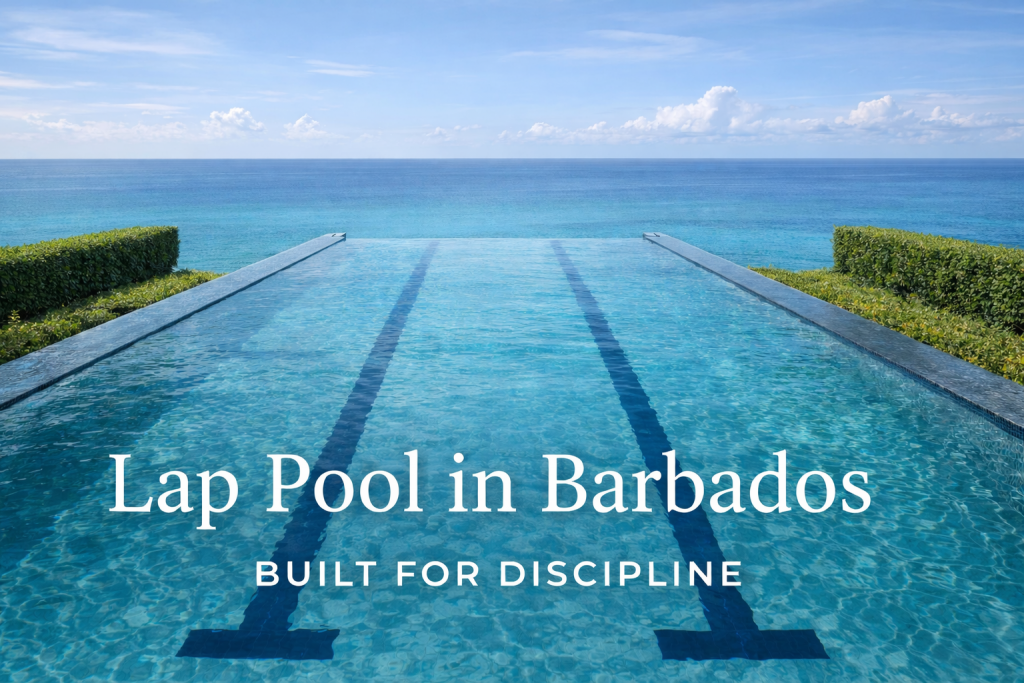
Illustration for conceptual purposes. Actual facilities and experiences at The Leela Vida may vary. Why a Dedicated Lap Pool Matters More Than a Leisure Pool Swimming is one of the most effective forms of exercise available, yet the environment in which it takes place determines whether it becomes part of a long-term routine or simply an occasional activity. Most pools in Barbados are designed primarily for relaxation. They are ideal for cooling off, spending time with family, or enjoying the outdoors, but they are not designed for structured training. Wide open spaces, varying depths, and unrestricted movement make it difficult to establish rhythm or measure progress. Swimmers constantly adjust to other people, change direction unexpectedly, or interrupt their pace. For professionals who value consistency, these interruptions gradually reduce the appeal of swimming as a serious training tool. The problem is not swimming itself. The problem is that most leisure pools are not designed to support disciplined performance. Why Pool Design Influences Performance A dedicated lap pool changes the entire experience because it has a different purpose from the moment it is designed. Rather than prioritising recreation, every element supports structured movement. Clearly defined lanes encourage consistent pacing. The layout naturally creates direction and rhythm, allowing swimmers to maintain uninterrupted intervals without constantly changing course or avoiding other users. This structure transforms swimming from casual exercise into measurable training. Progress becomes easier to track because distance, pace, and endurance can all be repeated under consistent conditions. Like any well-designed training environment, the pool encourages routine rather than improvisation. The body responds positively to this predictability, gradually adapting to repeated effort while improving cardiovascular fitness, muscular endurance, and overall conditioning. Why Pool Length Matters The length of a lap pool plays an important role in the quality of training. Short pools require frequent turns that interrupt breathing patterns and reduce the opportunity to establish a natural rhythm. Every turn briefly breaks momentum, making longer intervals more difficult to sustain. A 50-foot lap pool provides a far more effective balance between space and practicality. Swimmers have sufficient distance to settle into a consistent stroke pattern, regulate breathing, and maintain steady effort before turning. This creates smoother training sessions where endurance, pacing, and technique can be developed more effectively over time. Rather than feeling like a recreational swim, each session becomes purposeful. Warm-ups, interval training, recovery laps, and endurance work all fit naturally within the same environment, allowing members to follow structured programmes that produce measurable improvement. Environment Builds Discipline Many people believe discipline comes entirely from personal motivation. In reality, the environment plays an enormous role in determining whether healthy habits are maintained. Well-designed environments reduce unnecessary decisions and encourage consistent behaviour almost automatically. A dedicated lap pool follows this principle. Members arrive, enter their lane, begin their session, complete their programme, and finish without unnecessary interruption. There is very little uncertainty because the environment has already established the structure. This simplicity encourages consistency. Training becomes something that naturally fits into the day instead of requiring constant planning or adjustment. Over time, the routine becomes easier to maintain because the environment supports it rather than competing against it. Swimming Becomes Part of a Complete Performance System Swimming offers significant cardiovascular and muscular benefits on its own, but its value increases substantially when it forms part of an integrated performance routine. Following a structured swim session with recovery therapies allows the body to transition efficiently from physical stress into recovery. Cold water immersion helps reduce inflammation after demanding training. Heat therapy encourages circulation and muscular relaxation. Red light therapy supports cellular recovery and tissue repair. Together, these elements create a complete training cycle where exercise and recovery support one another instead of existing as separate activities. For busy professionals, this integration is particularly valuable. Rather than organising multiple appointments across different locations, everything happens within one carefully designed environment. Time is saved, routines become easier to maintain, and recovery becomes part of the training process rather than something postponed until later. The Mental Benefits of Structured Swimming Swimming in a dedicated lap pool creates benefits that extend beyond physical fitness. The repetitive rhythm of controlled breathing, consistent movement, and uninterrupted laps encourages a level of mental focus that is increasingly difficult to achieve during a busy working day. For many professionals, this becomes an opportunity to disconnect from constant digital stimulation while remaining physically active. The structured nature of lap swimming encourages concentration without requiring constant decision-making. Attention narrows naturally towards breathing, movement, and pacing, allowing the mind to settle while the body continues working. This combination of physical effort and mental clarity explains why swimming remains one of the preferred forms of exercise for many executives, entrepreneurs, and professionals seeking sustainable performance over the long term. A Different Standard for Aquatic Training A dedicated lap pool naturally feels different from a recreational swimming pool. The atmosphere is calmer, the purpose is clearer, and every aspect of the environment encourages structured movement rather than casual activity. This is not intended to reduce enjoyment. Instead, it reinforces the idea that the space exists to support consistent training and measurable progress. The quieter atmosphere also complements the wider philosophy of a luxury fitness center designed around focus, efficiency, and long-term performance. Members are able to train without unnecessary interruption, maintain their routines more consistently, and integrate swimming into a broader programme that includes strength training, recovery, and healthy nutrition. Why The Leela Vida Chose This Approach The lap pool at The Leela Vida has been designed as part of a complete performance environment rather than as a leisure feature. Its purpose is to support structured aquatic training that complements strength training, recovery therapies, and professional productivity within the same location. Like every other element of The Leela Vida, the pool reflects a simple philosophy. Environments shape behaviour. When an environment encourages consistency, healthy habits become easier to maintain. When those habits are repeated over time, they produce meaningful results. The lap pool is therefore much
Lap Pool in Barbados: Built for Discipline, Not Leisure Read More »
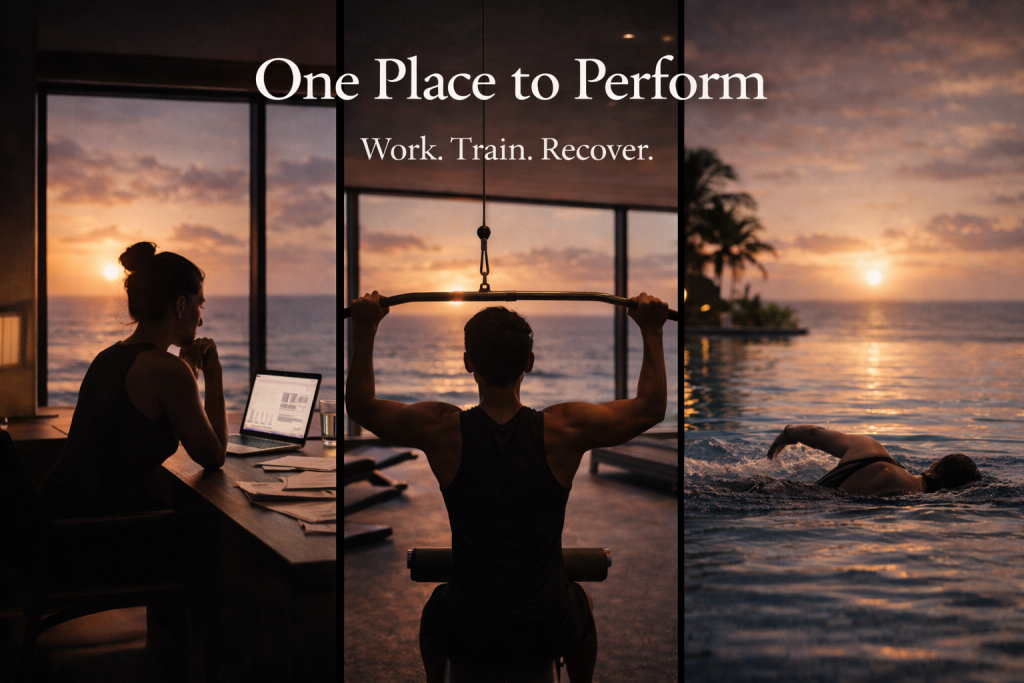
Illustration for conceptual purposes. Actual facilities and experiences at The Leela Vida may vary. Why Modern Professionals Are Bringing Work, Fitness and Recovery Together Modern professionals no longer struggle because they lack discipline or ambition. Most already understand the importance of exercise, good nutrition, and maintaining their health. The real challenge is fragmentation. Work happens in one location, training in another, recovery somewhere else, and meaningful focus is constantly interrupted by travelling between them. Every change of environment demands a mental reset. Every journey introduces new distractions, decisions, and delays. Over time, these interruptions consume more cognitive energy than people realise. It is rarely the work itself that creates exhaustion. More often, it is the constant switching between disconnected environments. Today’s executives, entrepreneurs, and remote professionals operate across multiple time zones, carry significant responsibility, and rely on sustained mental clarity. The traditional model of separating work, fitness, and recovery was built for a different generation. Modern performance requires a more integrated approach. Why Integration Has Become a Competitive Advantage Integration is no longer simply a lifestyle preference. For many professionals, it has become a practical requirement. When work, movement, and recovery exist within a single environment, unnecessary transitions disappear. A focused work session flows naturally into training. Recovery follows immediately afterwards. The body and mind return to a productive state without the disruption of travelling across the island or adapting to multiple settings throughout the day. This continuity protects both physical and mental energy. Decision-making remains sharper, routines become easier to maintain, and consistency improves naturally because there are fewer opportunities for the day to fall apart. In Barbados, where many professionals deliberately relocate to improve their quality of life, this approach has particular value. Increasingly, successful people are asking not how much they can fit into a day, but how well their environment supports sustained performance from morning until evening. Better Work Requires Better Environments The nature of work has changed permanently. Productivity is no longer tied to a traditional office or a fixed desk. Professionals move between virtual meetings, strategic planning, client calls, travel, and independent work throughout the day. What matters now is not simply having somewhere to sit with a laptop. It is having an environment that protects concentration. Many coworking spaces are designed around activity rather than focus. Conversations, phone calls, constant movement, and shared social areas create a level of background distraction that slowly erodes attention. While these environments often appear productive, they rarely support deep thinking. High-performing professionals require something different. They value quiet, privacy, and consistency because these conditions allow better decisions to be made. Executive work pods and carefully designed business lounges provide more than somewhere to work. They create an environment where attention remains protected, allowing meaningful work to be completed with greater clarity and in less time. Movement Is Part of Professional Performance For many professionals, exercise is still viewed as something that happens outside the working day. Increasingly, this distinction no longer reflects reality. Physical movement directly influences cognitive performance. A structured workout improves circulation, reduces accumulated stress, restores alertness, and often produces clearer thinking than passive rest ever could. The challenge is not recognising these benefits. The challenge is maintaining consistency when training requires another journey, another change of clothes, another parking space, and another adjustment to an already demanding schedule. When exercise becomes another logistical challenge, it gradually shifts from being essential to being optional. Integrated environments change this completely. Professionals move naturally from focused work into structured training before returning to their responsibilities with renewed energy. Fitness becomes an extension of productivity rather than competing with it. Over time, this simple change creates significant improvements in both physical health and professional performance. Recovery Is Where Long-Term Performance Is Protected Most people understand the value of hard work. Many appreciate the importance of regular exercise. Far fewer recognise that recovery is what allows both to remain sustainable. Performance does not improve during periods of effort alone. It improves when the body has the opportunity to repair, adapt, and restore itself. Without structured recovery, fatigue accumulates quietly. Mental clarity declines, sleep quality deteriorates, stress becomes more difficult to manage, and physical progress slows despite increasing effort. Recovery is therefore not passive or indulgent. It is a deliberate process that supports long-term resilience. Cold plunge therapy, infrared heat, red light therapy, controlled breathing, and quiet recovery environments all contribute to regulating the nervous system and preparing the body for the next period of high performance. When recovery is separated from the rest of the day, it is often skipped because time becomes limited. When recovery exists alongside training and work, it becomes an effortless part of a consistent routine. The Hidden Cost of Constant Transitions Many professionals invest considerable effort into improving each individual part of their day. They optimise their meetings, refine their training programmes, improve their nutrition, and invest in recovery techniques. What often goes unnoticed is the cost of moving between these activities. Travelling across the island, finding parking, navigating different facilities, waiting for equipment, and repeatedly adjusting to new environments all consume attention without adding value. These hidden interruptions gradually reduce productivity because they create constant mental switching. Integrated environments remove this invisible burden. Moving from work to training takes minutes rather than an hour. Recovery naturally follows exercise without requiring another appointment elsewhere. Returning to focused work becomes easier because the environment remains familiar and uninterrupted. While each transition may save only a small amount of time, these improvements accumulate significantly over weeks, months, and years. Why One Environment Changes Everything When work, fitness, recovery, and wellbeing exist together within one carefully designed environment, the entire rhythm of the day changes. Decision fatigue decreases because fewer choices need to be made. Professionals no longer negotiate whether there is enough time to train or whether recovery can wait until tomorrow. Everything required to support performance already exists within the same location. This simplicity is one of the greatest luxuries available to busy professionals.
The End of Fragmented Living Read More »