General

The Executive Meeting Room Designed for Clear Decisions

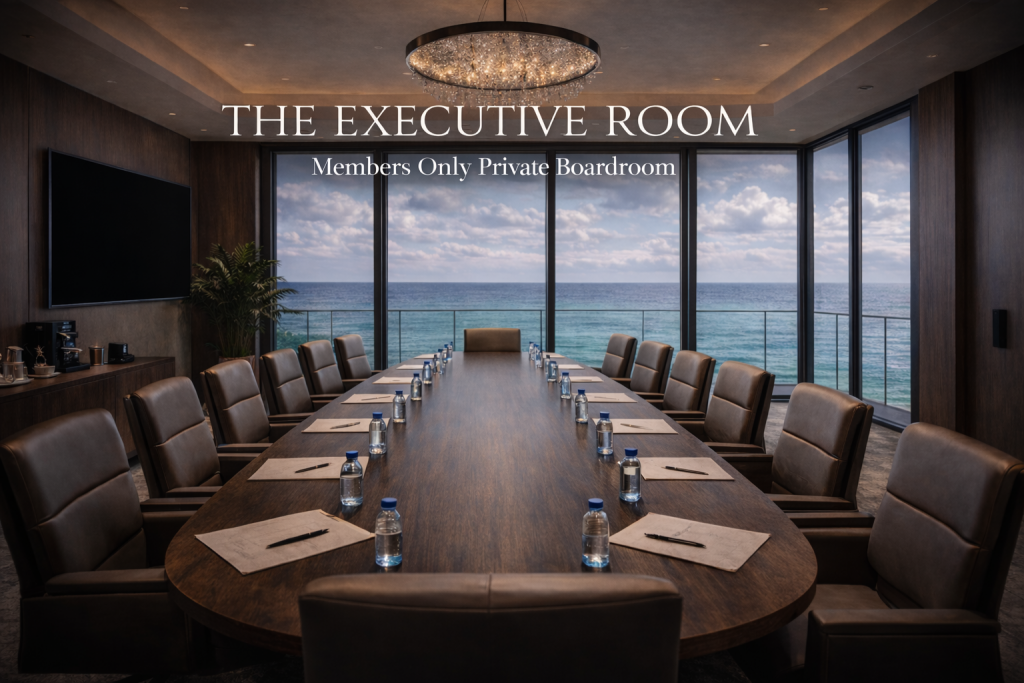
Digital illustration of the intended design and atmosphere. Final layouts and finishes may vary The Executive Meeting Room at The Leela Vida has been designed with one purpose in mind: helping professionals think clearly, make better decisions, and use their time well. It is not simply another meeting room inside a fitness center. It is part of a carefully planned performance environment where work, training, recovery, and focus exist within one integrated system. Every aspect of the space has been created to reduce distraction, protect attention, and support productive conversations. Senior professionals rarely need larger rooms or more technology. They need an environment that allows important discussions to happen without interruption. At The Leela Vida, the Executive Meeting Room reflects that philosophy by providing a calm, structured setting where meaningful work can take place. An Environment That Supports Better Thinking The quality of a meeting is influenced as much by the environment as it is by the people around the table. Open spaces, background noise, frequent interruptions, and constant movement gradually reduce concentration, even when participants believe they are focused. Every distraction forces the brain to divide its attention, making thoughtful discussion more difficult. A controlled meeting environment removes these unnecessary demands. Conversation becomes calmer, ideas are explored more thoroughly, and decisions are reached with greater confidence. Rather than competing with the surroundings, attention remains directed towards the discussion itself. This creates meetings that feel purposeful rather than rushed, allowing participants to focus entirely on the work in front of them. Access That Protects the Environment The quality of any professional environment depends largely on consistency. Spaces that are continually used by different groups with different expectations often lose the atmosphere that makes them effective. The Executive Meeting Room at The Leela Vida has therefore been designed primarily for members and their invited guests. This approach helps preserve the professional standards, privacy, and quiet atmosphere that members expect. Meetings take place within a trusted environment where confidentiality is respected and the experience remains consistent from one session to the next. Rather than operating as a public venue, the room forms part of a broader environment designed to support professionals who value structure, discretion, and productive use of their time. Designed for Productive Conversations Capacity influences the quality of discussion far more than many organisations realise. Large groups often encourage passive participation, making it easier for individuals to remain silent while only a small number contribute meaningfully. Smaller groups naturally create greater engagement, stronger accountability, and more direct conversation. The Executive Meeting Room has therefore been designed to comfortably accommodate up to fifteen people, allowing every participant to contribute without the discussion becoming fragmented. Eye contact remains natural, conversations flow more easily, and decisions are reached more efficiently because everyone remains actively involved. The room encourages focused dialogue rather than lengthy presentations, creating meetings where progress is made instead of merely discussed. Integrated Into the Working Day One of the greatest advantages of the Executive Meeting Room is not the room itself but its position within the wider Leela Vida environment. Members are able to move naturally between focused work, structured training, recovery, and professional meetings without leaving the property. This continuity reduces unnecessary travel, preserves mental momentum, and allows the day to unfold with far fewer interruptions. Many professionals find that physical movement before important meetings improves concentration and reduces mental fatigue. Recovery following demanding work helps restore energy before returning to other responsibilities. By placing these elements together within one location, The Leela Vida allows professionals to organise their day around performance rather than logistics. Every Detail Supports Focus The Executive Meeting Room has been designed with restraint rather than excess. Every element serves a practical purpose. Comfortable seating supports longer discussions without encouraging fatigue. Carefully planned lighting reduces eye strain while maintaining alertness throughout the meeting. Acoustic treatment allows conversation to remain clear without requiring raised voices, creating a calm atmosphere that encourages thoughtful discussion. Technology is reliable and straightforward so meetings begin without unnecessary delays or technical distractions. Nothing has been included simply to impress. The objective is to create an environment where attention remains directed towards the discussion rather than constantly being pulled elsewhere. The result is a meeting room that feels calm, organised, and highly functional. Supporting Modern Professional Life The way professionals work has changed significantly over the past decade. Many executives now divide their time between offices, remote work, travel, and international meetings. They need environments that provide flexibility without sacrificing professionalism. Increasingly, they value spaces that allow work to continue alongside health, recovery, and personal wellbeing rather than forcing each activity into separate locations. The Executive Meeting Room reflects this shift. It supports professionals who want to conduct important meetings, continue focused work, maintain their training routine, and recover effectively, all within one carefully managed environment. Rather than separating these activities, The Leela Vida brings them together into a single daily rhythm that supports both productivity and long-term performance. The Leela Vida Standard Most meeting rooms simply provide a place for people to gather. The Executive Meeting Room at The Leela Vida has been created to support something far more valuable: clear thinking, productive discussion, and decisive action. Every aspect of the environment has been designed to reduce unnecessary friction while helping professionals use their time more effectively. Like every part of The Leela Vida, the room reflects a simple philosophy. Better environments produce better habits. Better habits produce better decisions. And over time, better decisions shape better outcomes. For professionals who value privacy, structure, and consistency, the Executive Meeting Room becomes more than a place to hold meetings. It becomes an environment where important work is able to happen at its highest standard.

The Executive Meeting Room Designed for Clear Decisions Read More »

Decision Fatigue and Performance

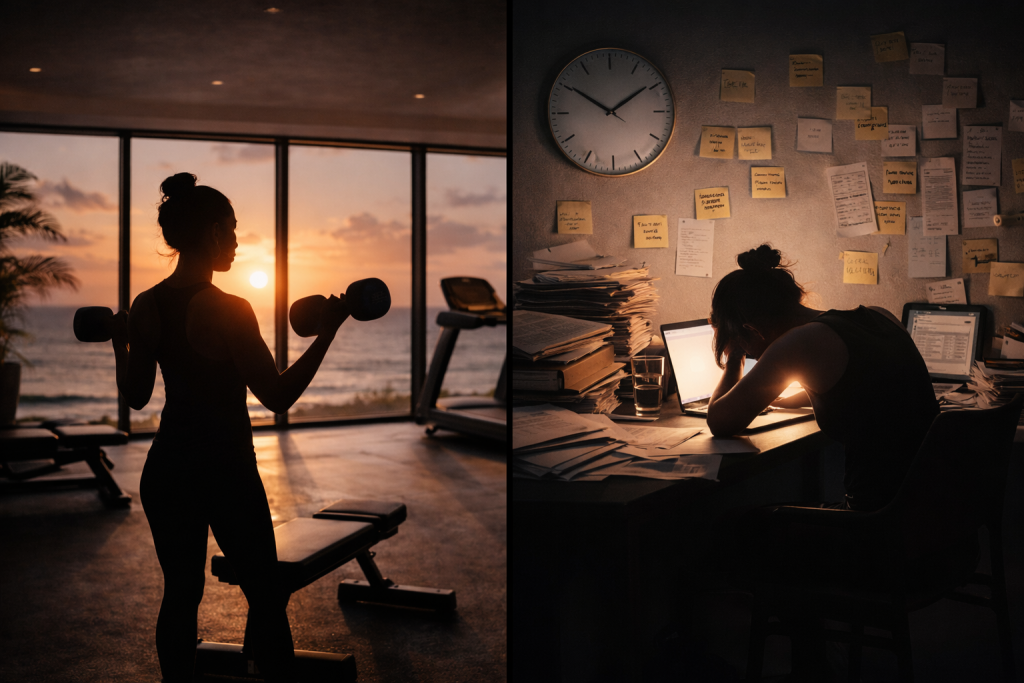
Digital illustration of the intended design and atmosphere. Final layouts and finishes may vary The Hidden Cost of Too Many Choices Every day, professionals make hundreds of decisions without noticing it. Most appear insignificant. What to eat for breakfast. Which route to take. Whether to answer an email now or later. When to train. Where to work. Which task deserves attention first. Individually these choices seem harmless. Together they create a steady drain on mental energy. High performers rarely struggle because they lack discipline or ambition. More often, they struggle because their attention has been gradually consumed by decisions that add little value. By late afternoon, many people feel mentally scattered despite having worked productively throughout the day. The issue is not a shortage of time. It is the cumulative effect of decision fatigue. Modern life constantly demands attention, and unless those demands are carefully managed, they quietly reduce the quality of the decisions that matter most. Decision Fatigue Is the Hidden Enemy of Consistency Discipline is often described as a personal characteristic, but in reality it depends heavily on mental energy. Every decision throughout the day draws from a limited reserve of cognitive resources. As those resources decline, maintaining high standards becomes increasingly difficult. Healthy meals are replaced by convenient alternatives. Training sessions are postponed. Important work is delayed because easier tasks feel more appealing. This is rarely a question of character. It is a predictable consequence of cognitive overload. Professionals often notice this pattern without recognising its cause. Morning routines feel structured and productive, while evenings become reactive and inconsistent. After hours of meetings, messages, emails, and constant problem solving, the brain naturally seeks the easiest available option. Without systems that reduce unnecessary decisions, maintaining consistency becomes significantly harder than it needs to be. Your Environment Shapes Every Decision The environment around you has a greater influence on your daily choices than many people realise. Poorly designed environments constantly force you to react. Crowded gyms require you to change your workout because equipment is unavailable. Noisy workspaces interrupt concentration. Endless food options encourage impulsive decisions instead of thoughtful ones. Every interruption requires another small adjustment, and each adjustment quietly consumes attention. High-performance environments work differently. Rather than presenting endless choices, they simplify the experience. The layout is intuitive. The flow feels natural. The next step requires very little thought because the environment has already been designed to support it. This principle extends well beyond architecture. When your surroundings reduce unnecessary complexity, your mind remains available for work that genuinely matters. Instead of spending energy navigating the environment, you invest that energy in performance itself. High Performers Build Systems Instead of Relying on Willpower One of the common characteristics shared by highly successful professionals is not exceptional motivation. It is the presence of reliable systems. They remove unnecessary decisions wherever possible. Meals become predictable. Training sessions happen at the same time each week. Work begins with consistent routines. Recovery follows a familiar sequence. These habits reduce mental effort because they no longer require fresh decisions every day. Many people mistakenly associate routine with rigidity. In reality, well-designed systems create freedom. They preserve cognitive capacity by eliminating repetitive choices that provide little value. Instead of deciding what to do every morning, professionals simply execute a routine that has already proven effective. The result is greater consistency with less mental effort. Cognitive Load Affects More Than Productivity Decision fatigue does not only reduce work performance. It influences physical health as well. When the brain remains under constant cognitive demand, stress levels rise. Concentration becomes more difficult. Recovery slows. Sleep quality often declines, and physical training begins to feel more demanding than it should. Over time, the body responds to this accumulated mental pressure in subtle but meaningful ways. Many professionals attempt to solve these problems by working harder or becoming more disciplined. Unfortunately, increasing effort rarely addresses the underlying cause. The issue is often not insufficient commitment but excessive cognitive load. Reducing unnecessary decisions creates benefits that extend across every aspect of daily life. Mental clarity improves. Training quality increases. Recovery becomes more effective. Sleep stabilises because the nervous system spends less time processing unnecessary information throughout the day. Sometimes the greatest improvement comes not from doing more, but from having less to think about. Simplicity Creates Better Performance There is a common assumption that high performance requires increasingly complex routines. In practice, the opposite is often true. The strongest systems are usually the simplest. They remove unnecessary variables rather than adding new ones. A predictable morning routine requires less effort than inventing a new one every day. A carefully planned workout produces better results than constantly changing programmes. A structured environment supports consistency because fewer adjustments are required throughout the day. This simplicity allows professionals to direct their attention towards strategic thinking, creativity, leadership, and meaningful work instead of spending it on low-value decisions. Complexity creates fatigue. Simplicity creates capacity. How The Leela Vida Reduces Decision Fatigue The Leela Vida has been designed around the understanding that the environment should simplify the day rather than complicate it. Every element has been planned to reduce unnecessary decisions while supporting a consistent daily routine. Limited membership helps preserve tranquillity, reliable equipment access, and predictable surroundings. Members do not need to adjust their workout because of overcrowding or constantly changing conditions. Executive work pods provide structured spaces where focused work continues without distraction. The recovery suite follows naturally after training, eliminating the need to organise separate appointments elsewhere. Even the café has been intentionally designed around a carefully curated menu that supports performance without overwhelming members with excessive choice. None of these decisions were made simply for convenience. Together they create an environment where professionals spend less time managing logistics and more time focusing on what truly matters. Why Fewer Decisions Lead to Better Results Modern professionals are surrounded by more choices than at any other point in history. Yet greater choice does not always produce better outcomes. Often it creates hesitation,

Decision Fatigue and Performance Read More »

The End of Fragmented Living

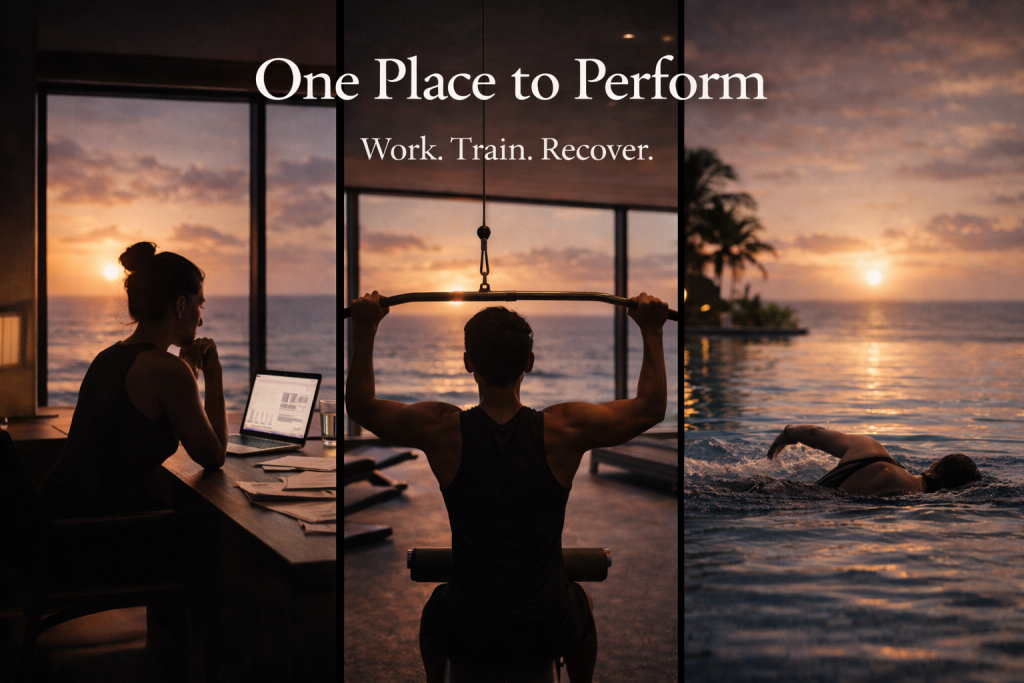
Illustration for conceptual purposes. Actual facilities and experiences at The Leela Vida may vary. Why Modern Professionals Are Bringing Work, Fitness and Recovery Together Modern professionals no longer struggle because they lack discipline or ambition. Most already understand the importance of exercise, good nutrition, and maintaining their health. The real challenge is fragmentation. Work happens in one location, training in another, recovery somewhere else, and meaningful focus is constantly interrupted by travelling between them. Every change of environment demands a mental reset. Every journey introduces new distractions, decisions, and delays. Over time, these interruptions consume more cognitive energy than people realise. It is rarely the work itself that creates exhaustion. More often, it is the constant switching between disconnected environments. Today’s executives, entrepreneurs, and remote professionals operate across multiple time zones, carry significant responsibility, and rely on sustained mental clarity. The traditional model of separating work, fitness, and recovery was built for a different generation. Modern performance requires a more integrated approach. Why Integration Has Become a Competitive Advantage Integration is no longer simply a lifestyle preference. For many professionals, it has become a practical requirement. When work, movement, and recovery exist within a single environment, unnecessary transitions disappear. A focused work session flows naturally into training. Recovery follows immediately afterwards. The body and mind return to a productive state without the disruption of travelling across the island or adapting to multiple settings throughout the day. This continuity protects both physical and mental energy. Decision-making remains sharper, routines become easier to maintain, and consistency improves naturally because there are fewer opportunities for the day to fall apart. In Barbados, where many professionals deliberately relocate to improve their quality of life, this approach has particular value. Increasingly, successful people are asking not how much they can fit into a day, but how well their environment supports sustained performance from morning until evening. Better Work Requires Better Environments The nature of work has changed permanently. Productivity is no longer tied to a traditional office or a fixed desk. Professionals move between virtual meetings, strategic planning, client calls, travel, and independent work throughout the day. What matters now is not simply having somewhere to sit with a laptop. It is having an environment that protects concentration. Many coworking spaces are designed around activity rather than focus. Conversations, phone calls, constant movement, and shared social areas create a level of background distraction that slowly erodes attention. While these environments often appear productive, they rarely support deep thinking. High-performing professionals require something different. They value quiet, privacy, and consistency because these conditions allow better decisions to be made. Executive work pods and carefully designed business lounges provide more than somewhere to work. They create an environment where attention remains protected, allowing meaningful work to be completed with greater clarity and in less time. Movement Is Part of Professional Performance For many professionals, exercise is still viewed as something that happens outside the working day. Increasingly, this distinction no longer reflects reality. Physical movement directly influences cognitive performance. A structured workout improves circulation, reduces accumulated stress, restores alertness, and often produces clearer thinking than passive rest ever could. The challenge is not recognising these benefits. The challenge is maintaining consistency when training requires another journey, another change of clothes, another parking space, and another adjustment to an already demanding schedule. When exercise becomes another logistical challenge, it gradually shifts from being essential to being optional. Integrated environments change this completely. Professionals move naturally from focused work into structured training before returning to their responsibilities with renewed energy. Fitness becomes an extension of productivity rather than competing with it. Over time, this simple change creates significant improvements in both physical health and professional performance. Recovery Is Where Long-Term Performance Is Protected Most people understand the value of hard work. Many appreciate the importance of regular exercise. Far fewer recognise that recovery is what allows both to remain sustainable. Performance does not improve during periods of effort alone. It improves when the body has the opportunity to repair, adapt, and restore itself. Without structured recovery, fatigue accumulates quietly. Mental clarity declines, sleep quality deteriorates, stress becomes more difficult to manage, and physical progress slows despite increasing effort. Recovery is therefore not passive or indulgent. It is a deliberate process that supports long-term resilience. Cold plunge therapy, infrared heat, red light therapy, controlled breathing, and quiet recovery environments all contribute to regulating the nervous system and preparing the body for the next period of high performance. When recovery is separated from the rest of the day, it is often skipped because time becomes limited. When recovery exists alongside training and work, it becomes an effortless part of a consistent routine. The Hidden Cost of Constant Transitions Many professionals invest considerable effort into improving each individual part of their day. They optimise their meetings, refine their training programmes, improve their nutrition, and invest in recovery techniques. What often goes unnoticed is the cost of moving between these activities. Travelling across the island, finding parking, navigating different facilities, waiting for equipment, and repeatedly adjusting to new environments all consume attention without adding value. These hidden interruptions gradually reduce productivity because they create constant mental switching. Integrated environments remove this invisible burden. Moving from work to training takes minutes rather than an hour. Recovery naturally follows exercise without requiring another appointment elsewhere. Returning to focused work becomes easier because the environment remains familiar and uninterrupted. While each transition may save only a small amount of time, these improvements accumulate significantly over weeks, months, and years. Why One Environment Changes Everything When work, fitness, recovery, and wellbeing exist together within one carefully designed environment, the entire rhythm of the day changes. Decision fatigue decreases because fewer choices need to be made. Professionals no longer negotiate whether there is enough time to train or whether recovery can wait until tomorrow. Everything required to support performance already exists within the same location. This simplicity is one of the greatest luxuries available to busy professionals.

The End of Fragmented Living Read More »

Time Is the Real Constraint

Digital illustration of the intended design and atmosphere. Final layouts and finishes at The Leela Vida may vary. Time Is More Valuable Than Motivation Most professionals do not struggle because they lack knowledge about fitness. They understand the importance of exercise, recovery, nutrition, and consistency. The real challenge is finding time to fit everything into an already demanding schedule. Every hour is allocated to work, family, travel, or personal commitments. When a fitness center introduces unnecessary delays or complications, it quickly becomes difficult to justify, regardless of how impressive the facilities may appear. This is why time has become one of the most important considerations when choosing a luxury fitness center in Barbados. Professionals are not searching for more motivation. They are looking for an environment that fits naturally into the way they already live and work. The greatest value often comes from removing unnecessary friction rather than adding more features. At The Leela Vida, this principle influences every aspect of the member experience. The objective is simple: make it easier to maintain a healthy routine by respecting the member’s time. Systems Outperform Motivation Motivation is unpredictable. It changes with workload, stress, travel, sleep quality, and the demands of everyday life. Even highly disciplined people experience days when enthusiasm is low. Building a routine around motivation alone rarely produces consistent results because motivation cannot be relied upon every day. Well-designed systems are different. A predictable environment, reliable access to equipment, thoughtful layouts, and consistent service reduce the number of decisions required before training even begins. When members know exactly what to expect each time they arrive, healthy habits become easier to maintain. This is why luxury fitness centers focus less on motivational messaging and more on creating environments that naturally encourage consistency. Long-term results are rarely driven by occasional bursts of motivation. They are built through routines that remain dependable regardless of how busy life becomes. Where Time Is Lost Most people do not notice where time disappears because it is lost in small moments throughout every workout. Waiting for equipment. Searching for available space. Changing exercises because machines are occupied. Travelling to a separate location for recovery. Driving somewhere else again for work or lunch. Individually these interruptions appear insignificant, but together they extend the day considerably. Many gyms in Barbados operate on high-volume membership models where congestion becomes inevitable during popular training times. Members often spend as much time adapting to the environment as they do following their actual programme. A luxury fitness center approaches this differently. Limited membership helps preserve reliable access to equipment and allows members to move through their workout without unnecessary interruptions. The result is not simply a shorter session. It is a more productive one. Reducing Decision Fatigue Professionals make hundreds of decisions every day. Meetings, deadlines, financial decisions, client conversations, travel arrangements, and family responsibilities all compete for attention. By the time they arrive at a fitness center, their cognitive resources have already been heavily used. The last thing they need is another series of decisions. Choosing alternative exercises because equipment is occupied, navigating crowded training floors, waiting for machines, or constantly adapting to changing circumstances all create unnecessary mental fatigue before the workout has even begun. A luxury fitness center should reduce that burden. Intuitive layouts, reliable equipment availability, clearly organised training spaces, and thoughtful design allow members to move naturally through each session without constantly thinking about what comes next. The goal is not simply to create a visually impressive facility. It is to create an environment where execution feels effortless. Bringing Recovery Into the Same Routine Recovery has traditionally been treated as something separate from training. People exercise in one location, then drive elsewhere for a massage, sauna, cold plunge, or other recovery service. While this may seem manageable, it creates additional travel, planning, and scheduling that many professionals simply do not have time for. Integrating recovery into the same fitness center changes that completely. Instead of splitting recovery across different appointments, members move naturally from training into cold plunge, infrared sauna, red light therapy, or quiet recovery spaces without leaving the building. The entire process becomes one continuous routine rather than several disconnected activities. This saves valuable time while making recovery significantly easier to maintain. Consistency improves because recovery becomes part of the workout rather than something that requires additional effort. The Environment Determines Efficiency The design of a fitness center influences far more than appearance. It directly affects how efficiently members move, train, and recover. Poor layouts create unnecessary walking. Crowded spaces interrupt concentration. Noise increases mental fatigue. Weak ventilation makes training more demanding than it needs to be. Even lighting influences mood, energy, and focus throughout a workout. A luxury fitness center considers each of these variables carefully. Spacious layouts, effective climate control, thoughtful acoustics, natural light, and intuitive movement between different areas all contribute to a calmer, more productive experience. When the environment supports the member instead of creating obstacles, sessions often feel shorter while producing better results. That difference becomes increasingly valuable for professionals working within tight schedules. Predictability Builds Better Habits Flexibility is often promoted as a major benefit within the fitness industry. While flexibility certainly has value, professionals frequently benefit more from predictability. Knowing that equipment will be available, sessions will begin on time, recovery facilities will be accessible, and the environment will remain calm removes uncertainty from the day. Predictable routines require less mental effort to maintain because fewer adjustments need to be made along the way. Limited membership plays an important role in preserving that consistency. Rather than constantly adapting to changing crowd levels, members experience a fitness center that functions reliably day after day. This makes long-term adherence far easier than relying on willpower alone. Why The Leela Vida Takes This Approach The Leela Vida has been designed around one guiding principle: respect the member’s time. Every element of the luxury fitness center reflects that philosophy. Limited membership helps preserve tranquillity, privacy, and reliable access to equipment. Integrated

Time Is the Real Constraint Read More »