Eduardo Arias

Body Metrics Barbados

3D body composition scan DEXA alternative Barbados

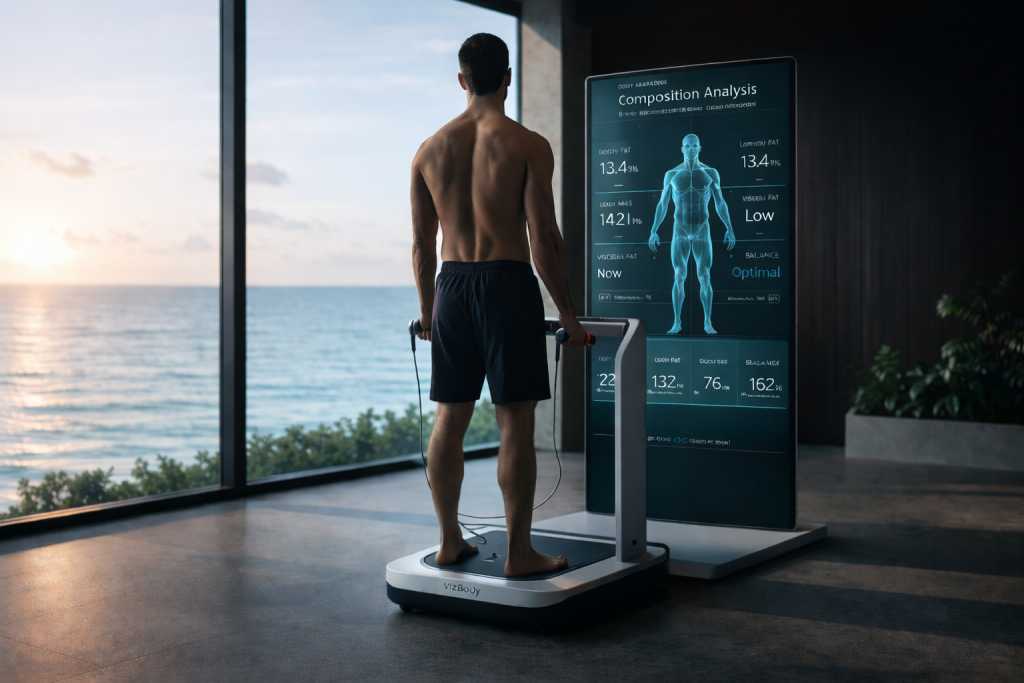
Illustration for conceptual purposes. Actual facilities and experiences at The Leela Vida may vary. Why Scale Weight Fails Executives Most professionals still rely on body weight as the primary measure of progress. This approach is outdated and lacks precision. A scale does not distinguish between fat, muscle, water retention, or inflammation. As a result, it produces misleading signals that can lead to poor decisions. Two individuals can weigh the same yet operate at completely different levels of performance, energy, and resilience. For an executive, this level of ambiguity is unacceptable. A drop in weight may appear positive, but without context, it often reflects muscle loss rather than fat reduction. This has direct consequences. Muscle loss reduces metabolic efficiency, lowers strength, and weakens long-term physical stability. Over time, this leads to fatigue, slower recovery, and reduced output. Tracking weight alone removes the detail required to make informed adjustments, making it a weak and unreliable metric for anyone focused on performance. What Body Composition Reveals Body composition analysis provides a structured breakdown of the body into measurable components. These include body fat percentage, lean muscle mass, visceral fat levels, and hydration status. Each of these metrics offers insight into how the body is functioning beneath the surface. Instead of relying on appearance or assumptions, you gain a clear view of what is actually changing over time. This allows for targeted decision making. If fat is not reducing, training or nutrition can be adjusted. If muscle mass is declining, recovery and resistance training can be corrected. This removes guesswork entirely. Over time, this level of precision creates consistent improvement, where each adjustment is based on data rather than perception. For individuals who value control, this becomes a necessary standard. The Executive Performance Advantage High-performing professionals operate in environments where data drives decisions. Financial performance, operational efficiency, and strategic planning are all built on measurable inputs. Health should follow the same principle. Without data, there is no control. Without control, results become inconsistent. Body composition tracking introduces structure into health. It aligns physical performance with the same disciplined mindset applied in business. When an executive understands how their body is changing at a detailed level, they can make decisions with confidence. Training becomes more effective. Nutrition becomes purposeful. Recovery becomes strategic. This creates alignment between physical capacity and professional demands. Why Precision Drives Better Outcomes Subjective measurement leads to inconsistent results. Relying on how you feel or how you look introduces variability that cannot be controlled. Energy levels fluctuate. Visual changes are gradual and often misleading. Without clear data, it becomes difficult to determine whether progress is being made or lost. Precision changes this entirely. Measurable changes in body fat, muscle mass, and metabolic efficiency provide clear direction. For example, reducing body fat while maintaining or increasing muscle creates a stronger, more efficient system. This improves energy stability, supports cognitive clarity, and enhances recovery capacity. These changes are not immediate, but they compound over time, creating long-term advantages that support sustained performance. The Role of Structured Assessment The environment in which measurement takes place is critical. Inconsistent conditions produce unreliable data. Public gyms and general fitness environments rarely offer the control required for accurate tracking. Variations in hydration, timing, and equipment can distort results, making it difficult to identify real progress. A structured assessment protocol eliminates this variability. Measurements are taken under consistent conditions, using the same equipment and timing. This produces reliable data that can be compared over time. For professionals who rely on accuracy in every other area of life, this level of consistency is expected. It ensures that every decision made is based on clear, repeatable information. A New Standard for Measurement Body composition analysis shifts the focus from appearance to performance. It replaces estimation with data and removes emotional bias from the process. This creates a more disciplined approach to health, where decisions are based on measurable outcomes rather than assumptions. At The Leela Vida, this approach is integrated into a broader system. Training, recovery, and measurement operate together within a controlled environment designed for high-performing individuals. This reflects a wider shift in the market, where professionals seek environments that reduce cognitive load and support structured performance. The objective is not short-term change, but sustained, measurable improvement that aligns with long-term health and professional output.

Body Metrics Barbados Read More »

Muscle Longevity Shift

Most people begin training with a narrow goal focused on appearance, but this approach fails to support long-term performance or health. High-performing professionals shift their focus early toward longevity because they understand that physical capacity directly affects their ability to perform in business and life. This shift is not optional. It becomes necessary once the body begins its natural decline. After the age of 30, muscle mass starts to reduce each year through a process known as sarcopenia. This decline is slow but constant, and it accelerates when combined with inactivity, poor nutrition, and chronic stress. Over time, this creates a measurable drop in energy, strength, and metabolic efficiency. Many professionals misinterpret this as aging, when in reality it is unmanaged muscle loss. For executives and high earners, this is not a cosmetic issue. It is a performance risk that compounds over time. Muscle directly influences energy stability, cognitive endurance, and resilience under stress. As muscle declines, output declines. This is why muscle longevity has become a core focus for those who expect to sustain high performance over decades. Muscle as Functional Capital Muscle should be viewed as a form of capital that produces daily returns. It is not static. It is an active system that influences how efficiently your body operates under pressure. The more muscle you maintain, the more stable and predictable your physical and mental performance becomes. This capital produces measurable outputs such as stable blood sugar, sustained energy levels, and reduced fatigue. It also improves recovery, allowing you to train, work, and operate at a higher level with less downtime. These outcomes are not theoretical. They directly impact your ability to maintain consistency across demanding schedules. Muscle also functions as a metabolic engine. It determines how effectively your body uses glucose, fat, and oxygen. When muscle mass is low, this system becomes inefficient. This leads to energy crashes, increased fat storage, and reduced focus. For professionals operating at a high level, this inefficiency creates a compounding disadvantage that becomes harder to reverse over time. Cost of Muscle Loss The most significant challenge with muscle loss is that it is gradual and often unnoticed until it has already created meaningful impact. Early signs are subtle. Slight reductions in strength, longer recovery times, and increased fatigue during normal activities are often dismissed. As the process continues, the effects become more pronounced. Strength declines further, recovery slows significantly, and the risk of injury increases. At the same time, metabolic rate drops, making it easier to gain fat and harder to maintain a lean, functional physique. These changes reduce both physical and mental capacity. For professionals, this translates into reduced work output and lower resilience. Long working days become harder to sustain. Travel and irregular schedules amplify the problem. Over time, this creates a cycle where reduced physical capacity leads to reduced professional performance, which then reinforces further decline. Strength as Strategy Strength training is the most effective intervention for preserving and building muscle over time. It is not optional for longevity. General activity and cardio alone do not provide the stimulus required to maintain muscle mass as you age. A structured strength training approach focuses on compound movements, progressive overload, and controlled intensity. This creates the conditions required for muscle retention and growth. Without this structure, training becomes inconsistent and results diminish. When applied correctly, strength training improves metabolic efficiency, supports hormone balance, and enhances recovery. It also builds resilience against stress and fatigue. In a controlled environment where equipment is always available and distractions are minimized, consistency improves significantly. This consistency is what ultimately drives long-term results. Muscle and Cognitive Output Muscle plays a direct role in cognitive performance. This is often overlooked but critical for professionals who rely on sustained mental output. The relationship between physical and cognitive performance is driven by biological mechanisms, not theory. Strength training improves blood flow to the brain, enhances glucose regulation, and reduces systemic inflammation. These factors directly support neuroplasticity, memory, and decision-making. Over time, this leads to sharper thinking and improved mental endurance. For executives managing complex decisions and long working hours, this becomes a competitive advantage. Reduced mental fatigue allows for clearer thinking and better judgment throughout the day. Muscle longevity therefore supports not only physical performance but also cognitive consistency at a high level. Energy and Metabolic Control Energy instability is one of the most common issues among professionals. Midday fatigue, afternoon crashes, and inconsistent output are often accepted as normal. In reality, these are signs of poor metabolic control. Muscle improves insulin sensitivity and stabilizes blood sugar levels. This creates a more consistent energy profile throughout the day. Instead of peaks and crashes, energy becomes steady and predictable. This stability reduces cravings, improves focus, and allows for sustained performance across long work periods. When combined with structured training and nutrition, muscle becomes a primary driver of energy control. This is essential for maintaining productivity without reliance on stimulants or short-term solutions. Environment and Consistency Most individuals fail to maintain muscle not because they lack knowledge, but because their environment creates friction. Public gyms introduce variables that disrupt consistency. Crowds, noise, and limited access to equipment reduce the ability to follow a structured routine. Consistency is the foundation of muscle preservation. Without it, even the best training program fails. An environment that removes friction allows individuals to train without interruption and maintain routine over time. A controlled, private setting with limited membership ensures that equipment is always available and the atmosphere supports focus. This structure increases adherence and leads to better long-term outcomes. The importance of environment in maintaining consistency is a key factor in achieving sustainable results. Recovery and Adaptation Muscle growth does not occur during training. It occurs during recovery. This is where the body adapts to the stimulus and becomes stronger over time. Without adequate recovery, progress is limited and injury risk increases. Recovery includes sleep, nutrition, and nervous system regulation. Each of these components plays a role in how effectively the body repairs

Muscle Longevity Shift Read More »

24 Hour Gym Barbados

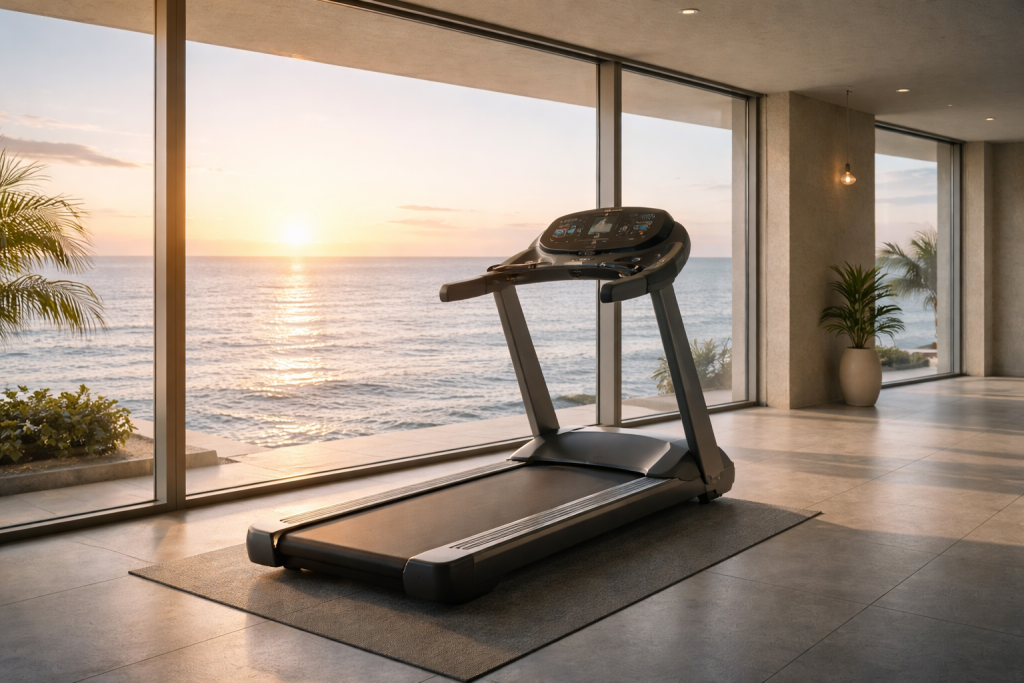
Illustration for conceptual purposes. Actual facilities and experiences at The Leela Vida may vary. Time Is the Constraint Time is the primary constraint for high performers. Not motivation. Not knowledge. Not access. Time. In Barbados, most gyms operate on fixed schedules with early closing hours and predictable congestion during peak times. This structure supports the general market but fails the executive profile. High-performing professionals do not operate on fixed timelines. Their day is shaped by decisions, shifting priorities, and constant demand. A gym that dictates when you train introduces friction into an already complex schedule. A 24 hour gym removes that friction and aligns fitness with real life. The Executive Schedule Reality Executives do not follow a linear day. Meetings extend without warning. Calls shift across time zones. Travel disrupts routine. This creates unpredictable gaps where training must fit in precisely. Without flexibility, sessions are missed, and consistency breaks. Once consistency breaks, performance declines. High performers do not rely on motivation to compensate. They rely on systems that remove obstacles entirely. A 24 hour gym allows training to occur when the opportunity appears, not when the facility permits it. Whether it is early morning before the day begins or late evening after work ends, access remains constant. This level of flexibility supports adherence and allows fitness to integrate into demanding schedules without compromise. Why Standard Gyms Fail The current gym model in Barbados is built around volume and accessibility for the general population. Opening hours, shared equipment, and peak traffic define the experience. This model aligns with pricing in the BD$292 to BD$350 range, where the offering is simple access rather than performance optimization. For an executive, this creates inefficiency. Waiting for equipment, adjusting workouts around crowds, and losing sessions due to closing times all reduce consistency. These small disruptions accumulate. Over time, they lead to reduced results and lower adherence. A system that introduces friction cannot support high-level performance. Training Around Energy Executives perform best when training aligns with energy, not time. Early morning sessions provide clarity and structure before decision-making begins. Midday sessions act as a reset, reducing stress and restoring focus. Evening sessions support recovery and nervous system balance after a long day. These windows do not align with standard gym schedules. A 24 hour gym allows training at the exact moment physical and mental energy are optimal. This creates precision in routine. Training becomes consistent because it fits naturally into the day, rather than being forced into a limited time window. Control Over Convenience The value of a 24 hour gym is often misunderstood. It is not about convenience. It is about control. Executives do not seek more options. They seek fewer constraints. Control means no dependency on opening hours, no need to avoid peak traffic, and no compromise on routine. This control creates stability. Stability drives consistency. Consistency drives results. In a high-performance environment, removing variables is more valuable than adding features. A 24 hour gym provides that control, allowing individuals to operate on their own schedule without disruption. The Private Club Advantage The shift in Barbados is moving toward private, controlled environments designed for high-performing individuals. These spaces prioritize privacy, discipline, and consistency over volume. They remove crowding, reduce noise, and protect the training environment. A 24 hour private gym completes this model. It combines unrestricted access with a controlled, quiet environment. This allows professionals to train, recover, and maintain routine without compromise. The result is not convenience. It is a system that supports long-term performance, energy stability, and sustained output at the highest level.

24 Hour Gym Barbados Read More »

VO2 Max Barbados

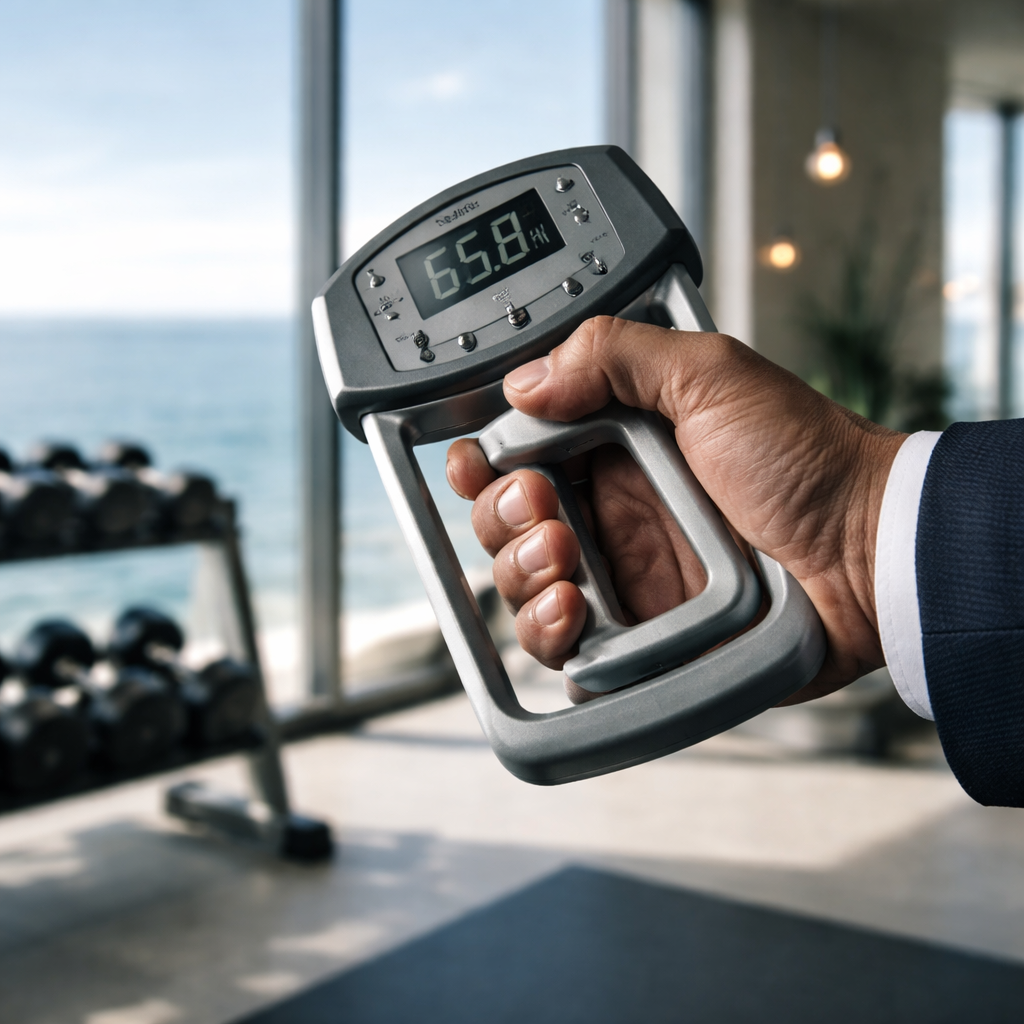
Illustration for conceptual purposes. Actual facilities and experiences at The Leela Vida may vary. The Oxygen KPI VO2 Max measures how efficiently your body uses oxygen under load, and this single metric defines your ability to sustain performance over time. It influences energy stability, cardiovascular strength, brain oxygenation, and recovery capacity. For executives, this is not a theoretical concept. It is a direct indicator of how long you sustain high-level output without decline. When oxygen delivery is efficient, energy remains stable and performance remains consistent. When it is not, fatigue appears earlier and output drops. This is why VO2 Max is increasingly treated as a core performance KPI rather than a fitness metric. It reflects the capacity of the entire system, not the heart or lungs alone. It determines how effectively your body supports long working hours, decision-making under pressure, and sustained cognitive demand. In a high-performance environment, this becomes a measurable advantage. Cognitive Performance Link The brain depends heavily on oxygen to function efficiently. Every process linked to focus, clarity, and decision-making depends on how well oxygen is delivered and used. When VO2 Max is low, this system becomes a limiting factor. Cognitive fatigue appears earlier. Focus becomes inconsistent. The quality of decisions declines as the day progresses. This explains a common pattern seen in professionals. Strong performance in the morning followed by reduced clarity in the afternoon is often blamed on workload. In many cases, the deeper issue is physiological capacity. As VO2 Max improves, the brain receives more consistent oxygen support. This supports clearer thinking, steadier focus, and reduced mental fatigue across longer periods. For executives, founders, and senior professionals, this matters because cognitive output is part of the job. From Reactive to Measurable Traditional health models are reactive. Annual checkups and blood markers identify issues after they appear. They do not provide a system for improving performance in real time. VO2 Max introduces a proactive, measurable approach. It identifies capacity before decline becomes visible. It gives you a baseline. It gives you a direction. It gives you a metric you improve through structured training. This aligns with how high-performing people already make decisions in business. Data drives strategy. Progress gets reviewed. Inputs get adjusted. Outcomes get measured. The same logic applies to physical performance. You do not wait for decline. You build capacity before you need it. Integrated Diagnostics: Build From a Clear Baseline VO2 Max conditioning works best when it starts with a proper baseline. Aerobic capacity tells one part of the story. Body structure, posture, muscle balance, and composition tell the rest. At The Leela Vida, performance training connects with data-driven assessment. This includes 3D body composition and posture analysis, allowing members to understand how their body is built, how it moves, and where improvement is needed. This matters because VO2 Max does not improve in isolation. Poor posture can affect breathing mechanics. Low lean mass can reduce metabolic efficiency. Imbalances can limit training quality. Excess body fat can increase the oxygen cost of movement. A baseline assessment helps convert training from guesswork into a structured plan. You see where you are starting. You identify what limits performance. You measure change over time. For a busy professional, this saves time. It directs effort toward the areas with the greatest return. The Executive Capacity Gap A consistent pattern exists among high-performing individuals. Cognitive demand is high, but aerobic capacity is often underdeveloped. This creates a gap between what the brain demands and what the body sustains. Over time, this imbalance leads to energy instability, slower recovery, and reduced output. The effects begin quietly. Midday fatigue increases. Stimulant use becomes more frequent. Workouts become inconsistent. Recovery takes longer. The body starts to lag behind the level of professional demand placed on it. This is not a failure of discipline. It is a failure of structure. Without addressing aerobic capacity, performance remains vulnerable. With the right conditioning system, you build a stronger base for work, training, and recovery. Training VO2 Max Properly Improving VO2 Max requires structure. It begins with zone 2 conditioning. This controlled, steady-state training builds mitochondrial capacity and improves the body’s ability to use oxygen efficiently. It creates the foundation for endurance, energy stability, and long-term consistency. Once this base is established, targeted intervals are added. These short, higher-intensity efforts increase peak oxygen uptake and push the system to adapt.Strength training supports the process by preserving muscle mass, improving metabolic efficiency, and reinforcing the physical structure needed for sustained performance. Together, these elements create a complete training model. Zone 2 builds the base. Intervals raise the ceiling. Strength training protects the system. Without structure, progress is limited. With structure, improvement becomes measurable and repeatable. The Leela Vida System The environment determines whether the system lasts. Most gyms introduce noise, crowding, inconsistency, and friction. These variables reduce adherence and limit results. They are not designed for high-performing individuals who need control, privacy, and precision. At The Leela Vida, VO2 Max conditioning sits within a broader performance system that connects training, diagnostics, recovery, and workspace. Members train inside an oceanfront fitness center in Barbados built for focused performance. They move into recovery protocols designed to support adaptation. They then transition into a private office workspace in Barbados without leaving the environment. This matters because performance is not created by one workout. It is created by a system you repeat. Train. Recover. Work. Measure. Refine. This integrated model reduces cognitive load and protects consistency. It supports the professional who needs physical energy, mental clarity, and structured recovery in one environment. VO2 Max is the metric. The system is what improves it.

VO2 Max Barbados Read More »

The Science of the 24 Hour Routine

Illustration for conceptual purposes. Actual facilities and experiences at The Leela Vida may vary. Section 1. Motivation Fails. Structure Wins Most people rely on motivation. High performers rely on structure. Motivation fluctuates. Biology does not. Your energy, focus, and recovery follow predictable cycles driven by circadian rhythm, cortisol, and glucose stability. When your day is unstructured, performance becomes random. When your day is structured, performance becomes repeatable. The Leela Vida model is built on this principle. It removes decision fatigue and replaces it with a controlled environment where training, work, and recovery are pre-aligned. This is critical for executives. Cognitive load is already high. Every unnecessary decision reduces output quality. A fixed routine eliminates that friction. Section 2. The First 3 Hours Define the Day The highest performing individuals protect the first 3 hours of the day. This is not preference. It is biology. Cortisol peaks in the morning. This creates natural alertness, focus, and drive. If this window is used correctly, the rest of the day stabilizes. If wasted, the entire day becomes reactive. The structure is simple. Wake at a fixed time. Avoid immediate input such as email or social media. Begin with internal alignment. This includes breathwork, stillness, or meditation. Follow with movement. This can be strength training or controlled cardio. Then fuel the body with stable nutrition. This sequence creates a controlled nervous system. It prevents cortisol spikes later in the day. It anchors mental clarity before external demands begin. This is why environments that support early routine execution outperform traditional gyms or coworking spaces. They remove friction between intention and action. Section 3. Energy Is Managed in Blocks, Not Hours Time management is outdated. Energy management drives performance. The brain operates in cycles of approximately 90 to 120 minutes. After this, focus declines. Most people ignore this and push through fatigue. This reduces output quality. High performers structure their day into energy blocks. Deep work sessions are scheduled in the morning and early afternoon when cognitive capacity is highest. Each block is protected. No interruptions. No multitasking. Between blocks, recovery is introduced. This includes movement, hydration, or short resets. The Leela Vida workspace model follows this principle. Four hour booking blocks are intentional. They align with two deep work cycles. This creates sustained output without burnout. Section 4. Recovery Is Not Optional. It Is Strategic Most people treat recovery as passive. High performers treat it as active. Recovery determines how quickly the body and brain return to baseline. Without structured recovery, stress accumulates. This leads to reduced focus, poor sleep, and inconsistent performance. The most effective routines integrate recovery daily. This includes cold exposure, heat therapy, and light-based interventions. These methods reduce inflammation, improve circulation, and stabilize the nervous system. The key is timing. Recovery is most effective when placed after training or high cognitive output. This creates a feedback loop. Stress is introduced. Recovery is applied. Adaptation improves. Over time, capacity increases. This is the difference between short bursts of productivity and sustained high performance. Section 5. The Environment Determines Compliance Discipline is often misunderstood. It is not willpower. It is environment design. If your environment creates friction, compliance drops. If your environment removes friction, consistency increases. This is why most people fail to maintain routines at home or in public gyms. Too many variables. Too many distractions. A controlled environment changes behavior without effort. At The Leela Vida, the structure is built into the space. Training, work, and recovery are integrated. Movement between each is seamless. There is no decision gap. This reduces cognitive load and increases adherence. The result is consistency. Consistency leads to measurable progress. This is also why membership is capped. Overcrowding destroys routine integrity. Space and access are part of performance design. Section 6. The 24 Hour Loop Creates Long Term Output A high performance routine is not a morning habit. It is a 24 hour loop. The evening determines the next morning. Late meals, excessive stimulation, and irregular sleep disrupt the entire cycle. The goal is stability. Fixed sleep time. Controlled light exposure. Reduced stimulation in the final hours of the day. This supports deep sleep. Deep sleep drives recovery, hormone balance, and cognitive reset. When this loop is consistent, performance compounds. Energy becomes predictable. Focus becomes stable. Output increases without additional effort. This is the foundation of executive performance. Not intensity. Not motivation. Structure repeated daily. This is the shift. From motivation to system. From effort to design. From random output to controlled performance.

The Science of the 24 Hour Routine Read More »

Gym Near Airport Barbados

Illustration for conceptual purposes. Actual facilities and experiences at The Leela Vida may vary. Travel Becomes Performance Most travel time is wasted. Hours are spent sitting, waiting, and absorbing noise without intention. Energy drops. Focus declines. The body tightens. By the time you reach your destination, your system is already compromised. This is accepted as normal, but it is not optimal. A gym near Barbados airport changes this completely. It converts idle time into structured performance time. Instead of waiting at the terminal, you move with intention. You train. You recover. You reset. This creates a transition from passive travel to controlled performance. At The Leela Vida, this shift is built into the experience. The environment is designed to support this exact use case for professionals who do not accept wasted time. The 10 Minute Advantage Location is not about convenience. It is about precision. The Leela Vida sits approximately 10 minutes from Grantley Adams International Airport. This creates a defined performance window that can be used intentionally before or after travel. This proximity allows multiple use cases. A 90-minute pre-flight window becomes a structured training and recovery session. A layover becomes productive rather than wasted. A post-flight arrival becomes an opportunity to reset the body immediately. You avoid airport congestion and noise while maintaining control of your schedule. This positioning is not accidental. It is designed to serve individuals who operate on structure and efficiency. Travel Disrupts the System Travel creates measurable disruption in the body. Extended sitting reduces circulation. Muscles tighten. Cortisol levels rise. The nervous system becomes imbalanced. These effects accumulate quickly and impact both physical and cognitive performance. Without intervention, this carries into your next destination. You arrive with reduced energy and compromised focus. A structured session before or after travel corrects this. Strength training restores circulation. Controlled cardio reactivates the system. Movement reduces fatigue. This allows you to maintain continuity rather than restarting every time you travel. Private Environment Matters Most gyms near airports are designed for volume. They are built to accommodate high traffic, not performance. This introduces friction. Crowds, waiting times, and noise disrupt training. You adjust your session based on others. This reduces efficiency and consistency. At The Leela Vida, the environment is controlled. Membership is capped. Space is protected. Equipment is available when needed. There is no crowd pressure. This aligns with the expectations of high-performing professionals who require precision and privacy. The environment removes variability and supports execution. Integrated Work and Transit Flow Travel does not remove responsibility. Work continues. Calls, emails, and decisions remain. Most people attempt this in airport lounges or terminals, where noise and distraction reduce effectiveness. This creates fragmented output. The Leela Vida integrates private work pods into the experience. These are sound-isolated environments with high-speed connectivity and executive seating. You complete work without interruption. You move from training to recovery to focused work in one controlled flow. This integration reflects the demand for environments that reduce cognitive load and support professional output. Recovery and Reset System Training is only one part of the system. Recovery determines how you perform next. Most facilities treat recovery as optional. This reduces the effectiveness of training and slows adaptation. At The Leela Vida, recovery follows immediately after training. Cold plunge reduces inflammation. Infrared sauna improves circulation. Red light therapy supports cellular repair. These are not separate services. They are integrated into a single system. This allows the body to reset quickly before travel. The environment completes the process. The oceanfront setting overlooking Long Beach provides a controlled but open space that supports mental clarity. You leave in a different state than you arrived. This is the real advantage. Not access to a gym, but access to a system that maintains performance across travel.

Gym Near Airport Barbados Read More »

Public Gyms Fail Executives

Illustration for conceptual purposes. Actual facilities and experiences at The Leela Vida may vary. The Environment Mismatch High-performing professionals operate in structured, controlled environments where time, output, and decision quality are tightly managed. Public gyms do not reflect this standard. They are built for access, not performance. They serve high volume, mixed intent users, and unpredictable usage patterns. This creates a structural mismatch between the expectations of disciplined professionals and the reality of the environment. When you enter a space that lacks order, control, and intentional design, your performance adjusts downward. You are no longer executing a defined system. You are reacting to conditions. This is the first failure point. A performance environment must mirror the way you operate in business. It must remove variability and protect your routine. Without this alignment, consistency breaks and results decline. Time Inefficiency Compounds Daily Time loss in public gyms is not obvious in a single session, but it compounds over weeks and months. Waiting for equipment, adjusting exercises due to availability, navigating crowded spaces, and dealing with interruptions all reduce session efficiency. If you lose 15 minutes per session and train five times per week, you lose over six hours per month. That is a full working day of lost output. For a high-performing professional, this is unacceptable in any other domain. Yet it is tolerated in training. This inefficiency reduces intensity and often leads to shortened sessions or skipped recovery work. Over time, this affects results. A controlled environment removes waiting and compresses sessions into precise, uninterrupted blocks. This restores time efficiency and aligns training with a high-performance schedule. Loss of Execution and Training Integrity In a public gym, you rarely execute your training plan exactly as intended. Equipment is occupied, space is limited, and you are forced to modify exercises or change sequencing. This creates inconsistency in stimulus, which directly affects results. You begin to compromise without realizing it. Sets are skipped. Load progression slows. Focus shifts. Over time, this leads to stagnation. High-performing professionals rely on systems that produce predictable outputs. In training, this requires the ability to execute the same structured plan repeatedly without interference. When the environment prevents this, performance becomes variable. A private, controlled setting ensures full execution. Every session follows the intended structure. This is how measurable progress is sustained. Cognitive Load and Mental Distraction Public gyms increase cognitive load. You are required to make constant micro-decisions throughout your session. Which equipment is free. What exercise to replace. How to adjust your timing. How to navigate other members. This creates decision fatigue before your workday has even begun. High-performing professionals already operate under significant cognitive demand. Adding unnecessary mental load reduces clarity and focus. It also reduces training intensity because attention is fragmented. A high-performance environment minimizes decision-making. The structure is clear. The flow is predictable. The space is calm. This allows you to enter a focused state where training becomes deliberate and efficient. Removing cognitive friction is not a luxury. It is a requirement for sustained performance. Lack of Privacy and Control Privacy is a key requirement for many professionals, particularly those operating at senior levels. Public gyms do not offer this. They are open environments with constant movement, observation, and interaction. This limits your ability to train with full focus. It also introduces discomfort for individuals who value discretion. Beyond privacy, there is a broader issue of control. You cannot control who is in the space, how equipment is used, or the general behavior of others. This unpredictability reduces the quality of the environment. High performers seek spaces where standards are maintained and behavior aligns with shared expectations. A private club environment enforces this alignment. It creates a space where members operate with discipline, respect, and intention. This directly supports performance and consistency. Absence of Integrated Recovery Public gyms are built around equipment. They do not integrate recovery into the training system. This creates an incomplete model. Recovery is essential for maintaining output, reducing fatigue, and supporting long-term progression. Without it, performance declines over time. High-performing professionals require systems that support both exertion and recovery within the same environment. This includes structured access to cold exposure, heat therapy, and other recovery modalities. When recovery is separate, it is often skipped due to time constraints. When it is integrated, it becomes part of the routine. This improves adherence and results. A complete system does not end with training. It includes the full cycle of stress and recovery. Inconsistency and Broken Momentum Consistency drives results. Public gyms make consistency difficult. Peak hour congestion, variable conditions, and unpredictable session quality create friction. This leads to missed sessions or reduced intensity. Momentum breaks. Once consistency is lost, progress slows. High-performing professionals rely on routines that are repeatable and stable. Training should follow the same principle. A controlled environment ensures that each session is delivered under the same conditions. This allows habits to form and performance to compound. Consistency becomes automatic rather than forced. Over time, this is the difference between average results and sustained improvement. The Shift Toward Private Performance Environments There is a clear shift among high-income professionals away from public gyms toward private, controlled environments. This shift is driven by logic rather than preference. Professionals are seeking spaces that align with their standards of efficiency, privacy, and performance. They value environments that reduce cognitive load, protect time, and integrate multiple functions into one system. The traditional gym model does not meet these needs. It remains focused on access and volume. Private clubs operate differently. They are designed around outcomes. They limit membership, control the environment, and integrate training, recovery, and workspace into a single system. This reflects a broader trend toward environments that support both physical and cognitive performance. What High-Performing Professionals Require High-performing professionals do not need more options. They need fewer, better ones. They require an environment that removes friction and supports execution. This includes immediate access to equipment, structured training flow, integrated recovery, and a calm, focused atmosphere. It also includes a

Public Gyms Fail Executives Read More »

The Science of Recovery in Barbados

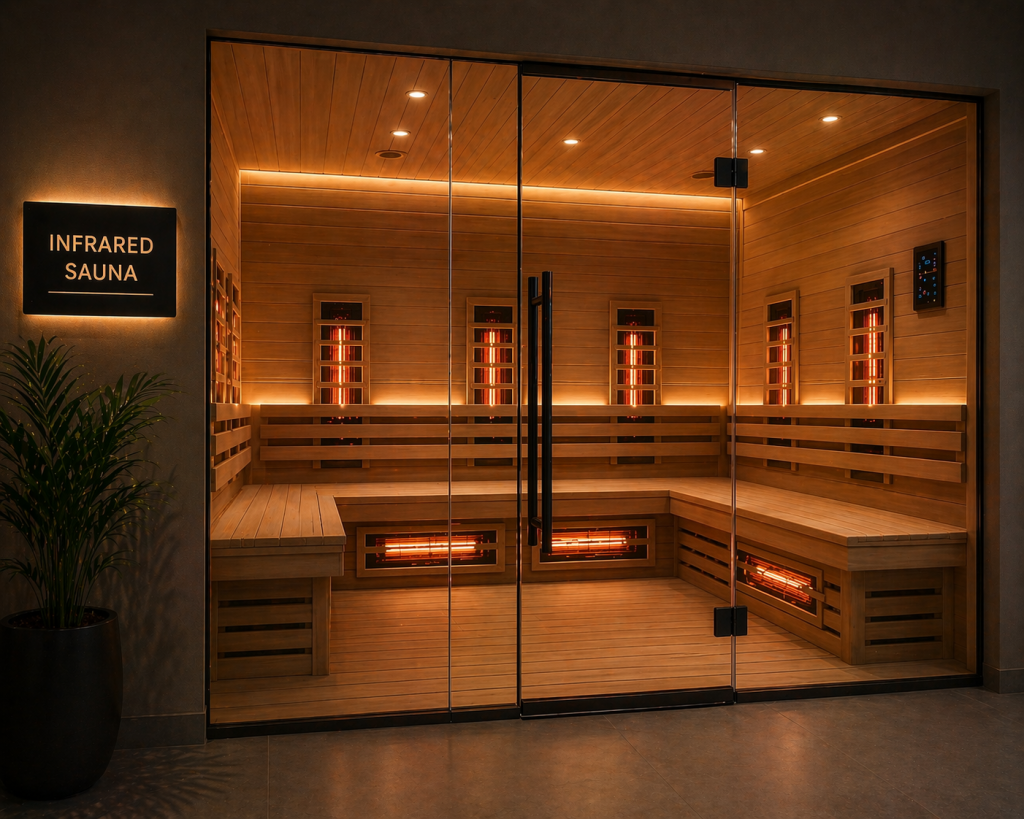
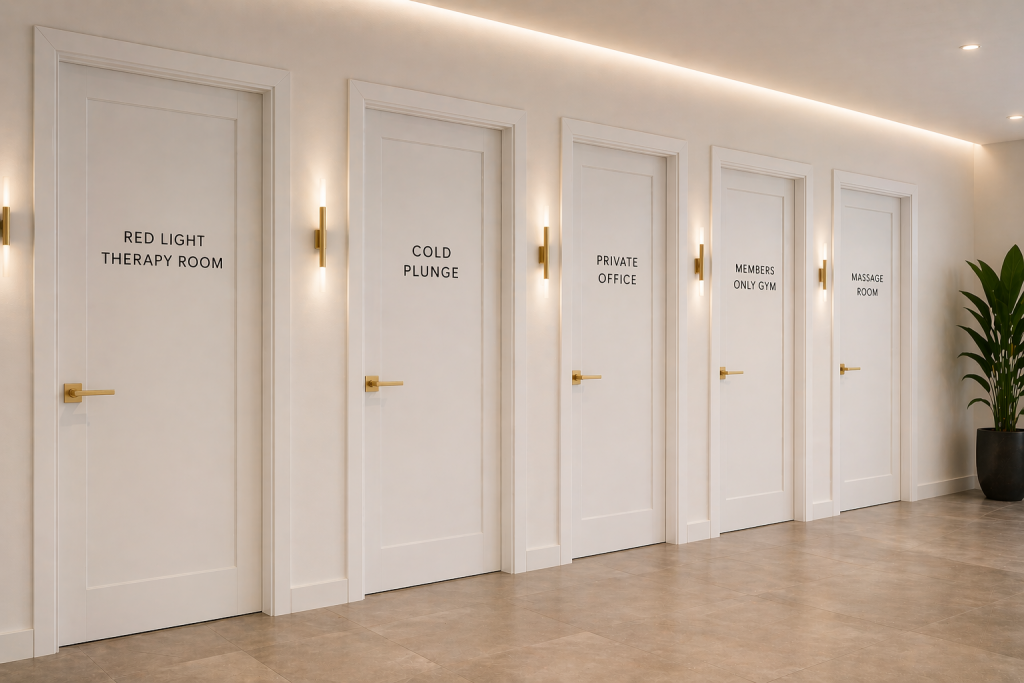
Illustration for conceptual purposes. Actual facilities and experiences at The Leela Vida may vary. Why Recovery Matters for High Performers Recovery determines your ability to sustain performance. Training creates stress, work adds cognitive load, and daily life compounds both. Without structured recovery, output declines even if effort remains high. High performers do not focus on doing more, they focus on recovering better. In a premium environment, recovery is not treated as a secondary service but as a core system. A controlled space with limited membership removes friction, noise, and waiting time, which protects your routine and ensures consistency. This model is essential because consistency, not intensity, drives long-term results. The Leela Vida is built around this principle, where recovery is integrated into your daily structure and supported by a disciplined, private environment aligned with executive performance expectations. Cold Plunge and Nervous System Reset Cold water immersion works by activating the autonomic nervous system, specifically the parasympathetic response. This leads to reduced inflammation, improved circulation, and a measurable decrease in cortisol levels after exposure. In Barbados, where the climate is warm year-round, the contrast between heat and cold becomes more effective. This contrast creates a stronger physiological adaptation, improving resilience and mental clarity. When used correctly, typically for two to three minutes post training or during periods of high stress, the cold plunge acts as a reset mechanism. It allows you to move from a heightened stress state into a controlled, focused state. For professionals managing high workloads, this becomes a daily tool to regulate energy and maintain clarity rather than a sporadic recovery method. Red Light Therapy and Cellular Repair Red light therapy operates at a cellular level through photobiomodulation. It stimulates mitochondrial activity, which increases ATP production, the primary energy source within cells. This process accelerates tissue repair, reduces inflammation, and improves circulation. The result is faster recovery from training, reduced joint discomfort, and improved skin quality. In a high-performance environment, this is critical because it reduces downtime between sessions and supports long-term physical resilience. The positioning of red light therapy within a clinical-grade recovery suite reinforces that this is not a cosmetic treatment but a functional recovery tool. Consistent use, typically ten to twenty minutes targeting specific muscle groups, enhances your body’s ability to repair itself efficiently and sustain performance over time. Infrared Sauna and Detox Efficiency Infrared sauna therapy differs from traditional heat exposure by penetrating tissue directly rather than heating the surrounding air. This leads to increased blood flow, improved mobility, and activation of detoxification pathways. In Barbados, where ambient heat is constant, controlled infrared exposure provides a targeted and measurable stimulus rather than passive heat stress. This distinction is important because it allows you to apply recovery with precision. Sessions of fifteen to twenty-five minutes, used after training or in the evening, support muscle relaxation, reduce stiffness, and improve sleep quality. For individuals operating at a high level, sleep quality is one of the most critical performance variables, and infrared therapy contributes directly to this outcome by regulating the nervous system and improving recovery efficiency. The Power of Integrated Recovery The real advantage lies in integration rather than individual tools. Most environments offer isolated recovery options, which require separate scheduling, travel, and decision-making. This creates friction, and friction reduces consistency. An integrated system removes these barriers by aligning training, recovery, and work within one environment. You train, transition immediately into recovery, and then return to work or rest without disruption. This structured flow reduces cognitive load and protects your time, which is a critical resource for executives and high performers. The system is designed to ensure that recovery is not skipped or delayed. It becomes part of your routine, not an additional task. This integration is a core differentiator and directly supports sustained performance. Why Barbados Changes the Recovery Equation Barbados provides a unique baseline for recovery due to its climate, natural light exposure, and reduced environmental stress compared to major cities. However, environment alone does not create performance. Without structure, it leads to comfort rather than improvement. The advantage comes from combining this environment with disciplined systems and advanced recovery tools. The island has seen a rise in high-net-worth professionals and remote executives who require environments that support both productivity and physical performance. This shift has created demand for integrated spaces that combine training, recovery, and work within a private setting. The Leela Vida is positioned to meet this demand by transforming Barbados from a leisure destination into a performance base where recovery is structured, measurable, and aligned with the needs of high-performing individuals.

The Science of Recovery in Barbados Read More »

Private Workspace Pods Barbados: The Shift in 2026

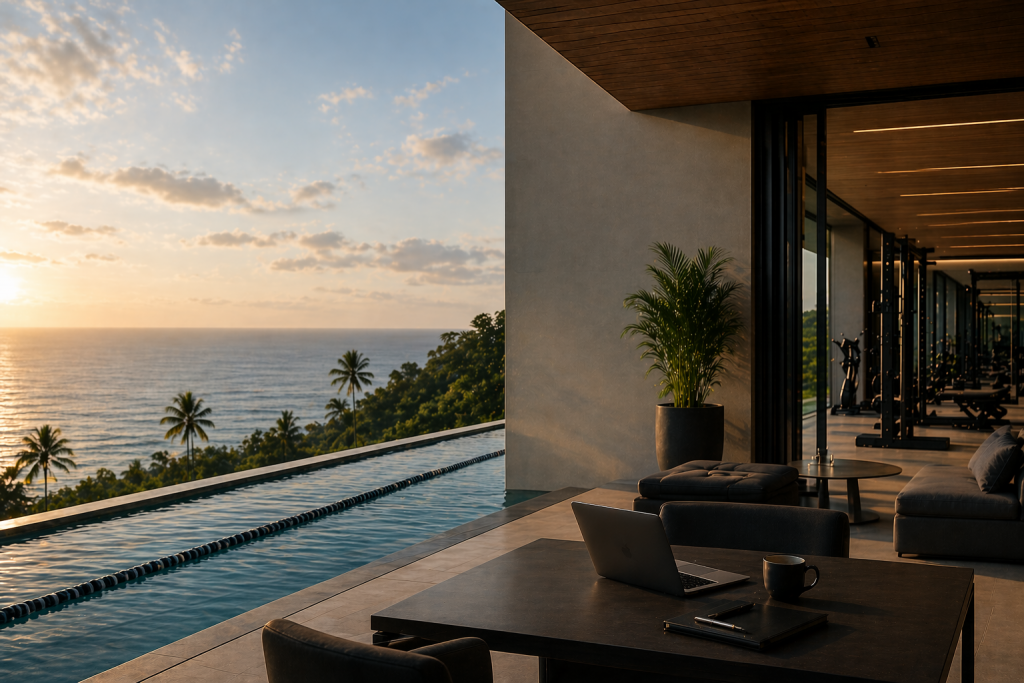
Illustration for conceptual purposes. Actual facilities and experiences at The Leela Vida may vary. A New Standard for Focus in Barbados High performers in Barbados no longer accept fragmented environments. Public gyms distract. Cafés interrupt. Offices drain energy. You see a shift toward controlled environments where output and recovery sit under one system. This shift aligns with a deeper need. You protect cognitive energy the same way you protect physical energy. The Leela Vida positions workspace pods as part of this system. Not an add-on. A core tool. The model is simple. Train. Recover. Work. Repeat. All within one controlled environment designed for discipline and clarity Why Traditional Workspaces Fail High Performers Most workspaces fail at one critical level. They do not protect focus. Noise, interruptions, and visual clutter reduce output quality. Even premium coworking spaces still operate on volume. High performers operate differently. You need uninterrupted blocks of time. You need silence. You need predictability. In Barbados, coworking ranges from BD$200 to BD$1,129 per month, but these spaces still lack privacy and integration with performance routines . The result is wasted time. A 4-hour work block becomes fragmented. Output drops. Decision fatigue increases. This is the gap workspace pods solve. The Rise of the 4-Hour Deep Work Block High performers now structure their day in blocks, not hours. The 4-hour deep work block has become the standard. No interruptions. No meetings. No distractions. The Leela Vida enforces this through design. Pods are only bookable in 4-hour or 8-hour blocks. No hourly usage. This protects the integrity of focus. It forces discipline. It aligns with how executives actually operate. Research and behavioral patterns show that deep work in controlled environments produces significantly higher output per hour. This is not about working longer. It is about working with intensity and clarity. The structure itself becomes a performance tool Workspace Pods as Performance Infrastructure Workspace pods are not offices. They are performance infrastructure. Sound isolation removes external noise. Controlled lighting reduces cognitive fatigue. Ergonomic design supports long focus sessions. High-speed connectivity ensures zero friction. At The Leela Vida, pods sit within a wider system. You move from training to recovery to work without disruption. This creates a continuous performance cycle. You do not switch environments. You do not reset mentally. You maintain momentum. This integration is the key differentiator. It is why executives are shifting away from traditional offices toward hybrid performance environments Privacy as a Strategic Advantage Privacy is no longer a luxury. It is a requirement. High performers handle sensitive information. Calls, decisions, and strategy require discretion. Open environments do not support this. Workspace pods solve this directly. You operate in a controlled, private setting. No overheard conversations. No interruptions. No external pressure. The Leela Vida reinforces this through strict capacity limits. Only 150 members. No crowding. No noise. This creates an environment where privacy becomes part of the value proposition. It is not marketed loudly. It is experienced quietly. This aligns directly with the expectations of executives and high-net-worth individuals The Integration of Work, Fitness, and Recovery The real shift is not the pod itself. It is the integration. High performers now design their day around energy cycles. You train in the morning. You recover. You work in deep blocks. You repeat. This model increases output while reducing burnout. The Leela Vida builds this into the environment. Gym, recovery, and workspace operate as one system. You eliminate transitions. You reduce friction. You maintain focus. This is why the model works. It aligns with how high performers already think. It simply provides the environment to execute it consistently. This is the future of work in Barbados. A controlled, private system where performance is protected at every level.

Private Workspace Pods Barbados: The Shift in 2026 Read More »

Private Gym Barbados

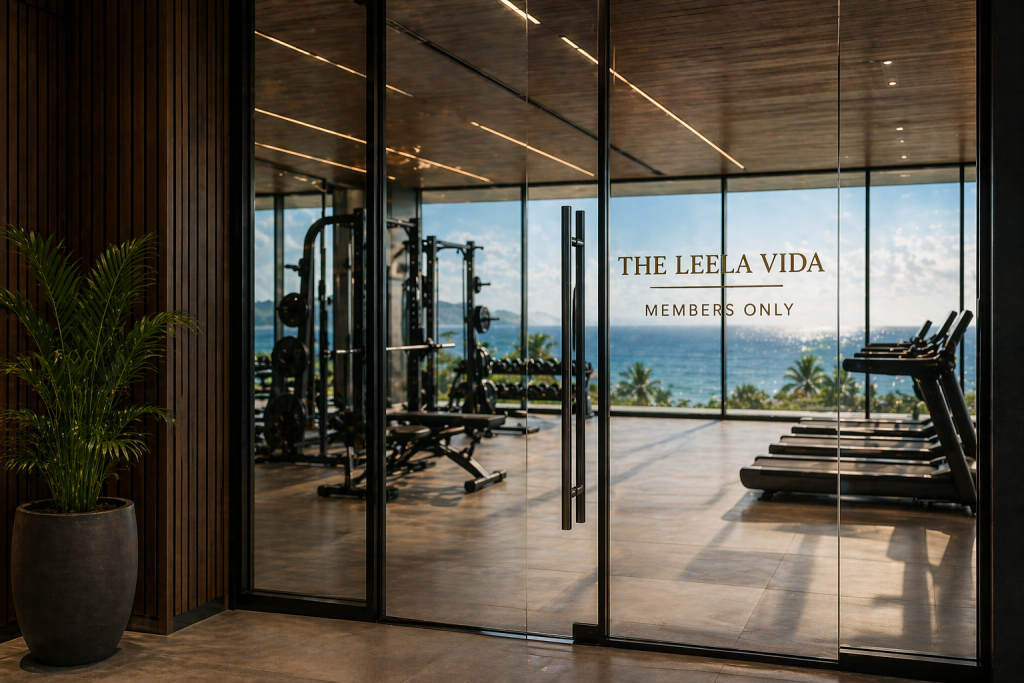
Illustration for conceptual purposes. Actual facilities and experiences at The Leela Vida may vary. Why a Private Gym Barbados Delivers Better Results for Professionals The definition of fitness has shifted for high performing professionals. It is no longer about access to equipment. It is about control, consistency, and performance. In Barbados, this shift is becoming clear. The rise of the private gym model reflects a deeper need. Professionals want environments that protect time, reduce friction, and support long term results. Public gyms still dominate the market. They serve general fitness needs. But they are not built for executives managing complex schedules and high cognitive load. A private gym in Barbados changes the structure. It removes variables that break discipline. It creates a controlled system where training, recovery, and focus align. Why Public Gyms Create Hidden Performance Loss Public gyms introduce inefficiencies that compound over time. These are not obvious at first. But they directly impact results. Waiting for equipment disrupts training flow. Noise and overcrowding reduce focus. Unpredictable peak hours make scheduling inconsistent. For professionals, this becomes a structural problem. You do not have unlimited time. A 60 to 90 minute session must deliver results. If 15 minutes are lost to waiting, the session quality drops. Over weeks and months, this reduces progress. A private gym in Barbados removes these variables. Limited membership ensures availability. Sessions become structured. Training becomes intentional. This shift improves both physical output and mental clarity. Time Efficiency Becomes the Primary Metric Most people evaluate gyms based on price. Professionals evaluate based on time. This is a fundamental difference. Public gyms appear cheaper. But they often cost more in lost productivity. Consider a typical scenario. You arrive during peak hours. You wait for equipment. You adjust your workout. You extend your session. This creates inefficiency. Over a month, you lose hours. A private gym in Barbados is designed to eliminate this. Membership caps ensure controlled usage. You arrive and start immediately. You move through your program without interruption. You leave on time. This efficiency compounds. It supports consistency. It protects your daily schedule. This is critical for professionals balancing business, health, and personal life. Privacy Improves Training Quality Privacy is often misunderstood. It is not about status. It is about focus. Public environments are designed for volume. They encourage movement, noise, and interaction. This breaks concentration. In contrast, a private gym in Barbados creates a controlled atmosphere. You train without distraction. You maintain form. You execute your program with precision. This leads to better outcomes. Professionals benefit from this environment. It aligns with how they operate in business. Structured. Focused. Disciplined. Over time, this consistency produces measurable results. The Environment Shapes Behavior Behavior is influenced by surroundings. Public gyms attract a broad audience. The standards vary. The energy is inconsistent. Private clubs create curated environments. In Barbados, this distinction is critical. A private gym attracts executives, founders, and disciplined individuals. These members value structure and performance. When you train in this environment, your behavior aligns. You maintain higher standards. You stay consistent. You avoid shortcuts. This creates accountability without enforcement. It becomes part of the culture. The result is sustained progress over time. Integrated Recovery Drives Long Term Results Most public gyms focus only on training. Recovery is treated as optional. This creates imbalance. Without recovery, performance declines. Injury risk increases. Consistency breaks. A private gym in Barbados integrates recovery into the system. This includes cold plunge, infrared sauna, and red light therapy. These tools support muscle repair, reduce inflammation, and improve circulation. The key advantage is integration. You do not need separate locations. You complete training and recovery in one place. This improves adherence. It ensures recovery becomes part of your routine, not an afterthought. Work and Training in One Environment Modern professionals do not separate work and fitness. They require flexibility. A private gym in Barbados often includes workspace pods and quiet areas. This allows you to manage business between sessions. You take calls. You respond to emails. You maintain productivity. This integration reduces friction. Instead of moving between locations, you operate within one environment. This reduces cognitive load. It allows you to maintain focus across both domains. The result is a more efficient day structure. Controlled Capacity Protects the Experience Capacity control is not a marketing tactic. It is a structural requirement. A private gym in Barbados typically operates with strict membership limits. This ensures the environment remains stable. It protects access to equipment. It maintains a calm atmosphere. It prevents overcrowding. This is critical for performance. High performing professionals require predictability. They do not adapt well to chaotic environments. A capped membership model ensures consistency. It creates a reliable system for training and recovery. Consistency Becomes the Competitive Advantage Results come from consistency. This is not complex. But it is difficult to maintain in unstable environments. Public gyms introduce variability. Crowding changes your routine. Noise breaks focus. Scheduling becomes inconsistent. A private gym in Barbados removes these variables. You train in the same conditions every time. This allows structured programming. It supports long term adherence. Over time, this consistency produces results. It becomes a competitive advantage. Especially for professionals who rely on physical and mental performance. The Private Gym Model Aligns with Executive Lifestyle The private gym model is not about luxury. It is about alignment. High income professionals operate differently. They value time. They prioritize efficiency. They require environments that support focus. A private gym in Barbados aligns with these needs. It combines training, recovery, and workspace in one system. It removes inefficiencies. It creates structure. It supports long term performance. This is why the model is growing. It reflects a shift in how professionals approach health and productivity.

Private Gym Barbados Read More »