Eduardo Arias

WHY WE BUILT THE LEELA VIDA

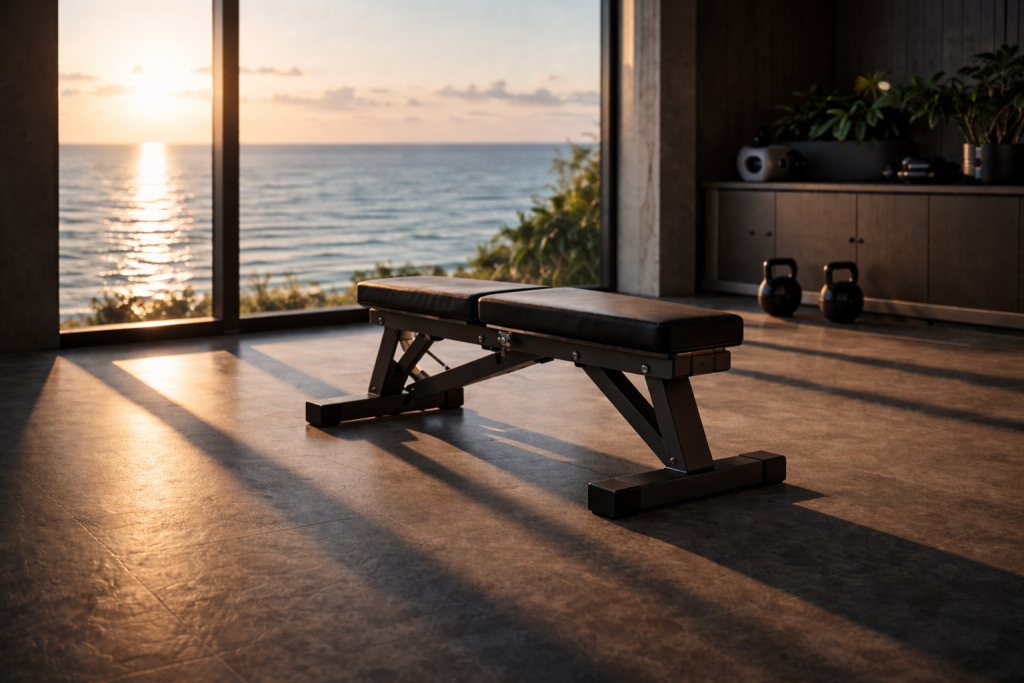
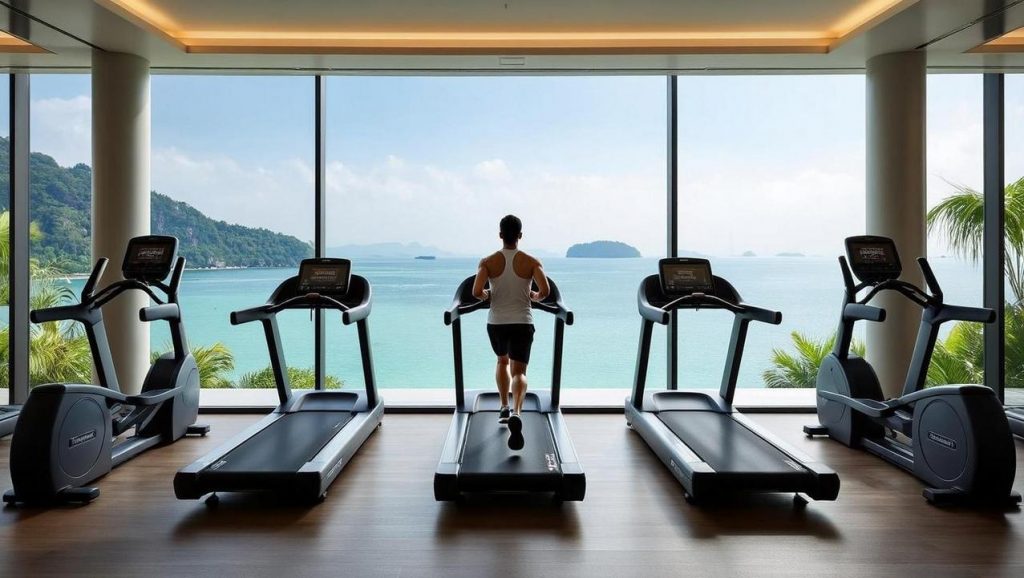
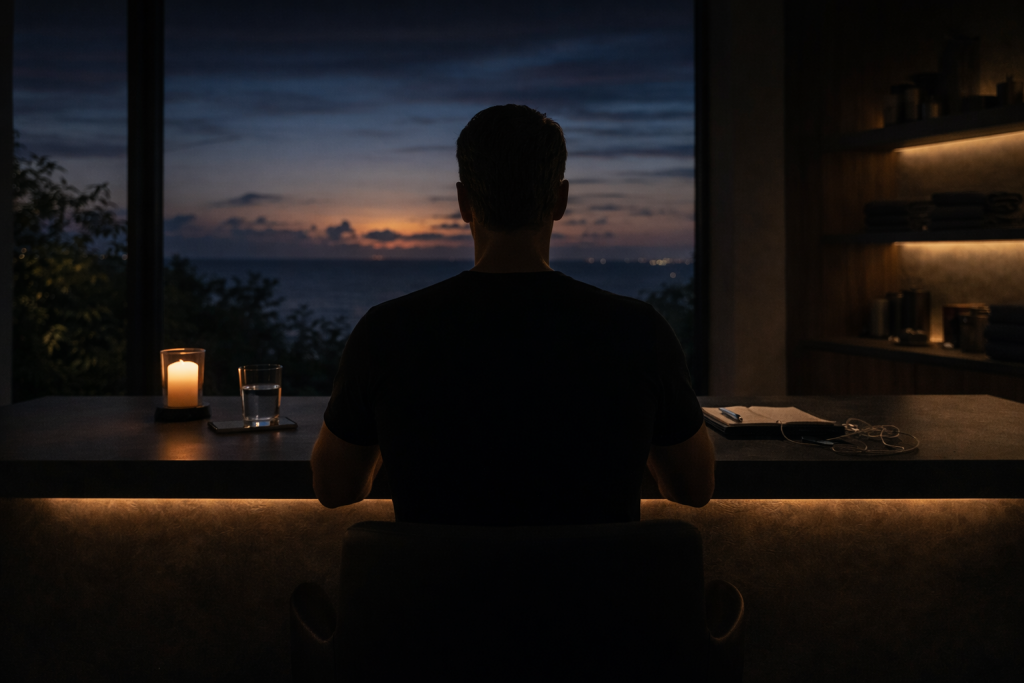
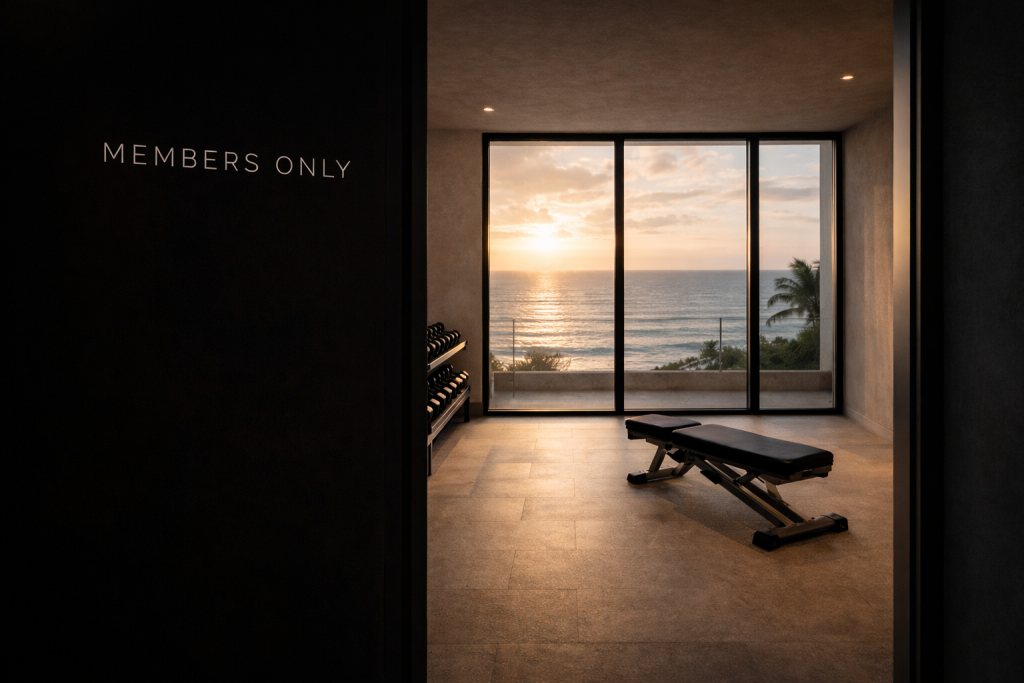
Digital illustration of the intended design and atmosphere. Final layouts and finishes may vary The Shift in Barbados Barbados has changed. It is no longer a short-term destination. It has become a base for professionals who run businesses, manage teams, and operate globally. The Welcome Stamp alone brought thousands of high-income individuals to the island, many in finance, law, and technology . These individuals do not want a resort lifestyle. They want structure, performance, and privacy. Existing gyms and coworking spaces do not meet this need. They are fragmented, crowded, and not designed for disciplined routines. The Leela Vida was built to respond to this exact gap. The Problem We Saw We observed a clear issue. High-performing individuals were forced to split their day across multiple locations. Train in one place. Work in another. Recover somewhere else. Each transition created friction. Time was lost. Focus was broken. The environment was inconsistent. Public gyms lacked privacy. Coworking spaces lacked energy and discipline. Recovery options were limited or non-existent. For a professional who values efficiency, this model does not work. The Leela Vida removes this fragmentation completely. A Private Performance Environment The Leela Vida was designed as a controlled environment. Not open. Not crowded. Not transactional. Membership is limited and vetted to protect the atmosphere. This ensures no waiting, no noise, and no disruption. Every detail supports focus. The gym overlooks the ocean. The workspace pods are private and sound-isolated. The recovery areas are structured, not decorative. This is not a lifestyle club. It is a performance environment where your routine is protected every day. Integration of Training, Work, and Recovery The core idea is simple. Everything exists in one place. You train. You transition directly into recovery. You move into focused work without leaving the environment. This creates continuity. It reduces decision fatigue. It improves consistency. Over time, this leads to better physical results, sharper thinking, and more stable routines. This integrated model is not common in Barbados. It is the defining feature of The Leela Vida and the reason it stands apart . Designed for a Specific Type of Member The Leela Vida is not for everyone. It is built for individuals who value discipline, privacy, and long-term performance. Professionals who avoid crowds. Individuals who protect their time. People who prefer a quiet, structured environment over a social or entertainment-driven space. The brand, tone, and design all reflect this. The goal is to create a peer-level environment where members feel aligned with those around them. This is critical for long-term retention and satisfaction . What The Leela Vida Supports The Leela Vida supports a complete lifestyle system. It supports consistent training without disruption. It supports deep work through private, controlled spaces. It supports recovery through structured tools like red light therapy, sauna, and cold exposure. It supports nutrition through a calm, focused café environment. It supports mental clarity by removing noise and distraction. Most importantly, it supports a routine that compounds over time. This is where real value is created. Not in a single visit, but in the consistency of the environment every day.

WHY WE BUILT THE LEELA VIDA Read More »

Focus and Recovery Measured

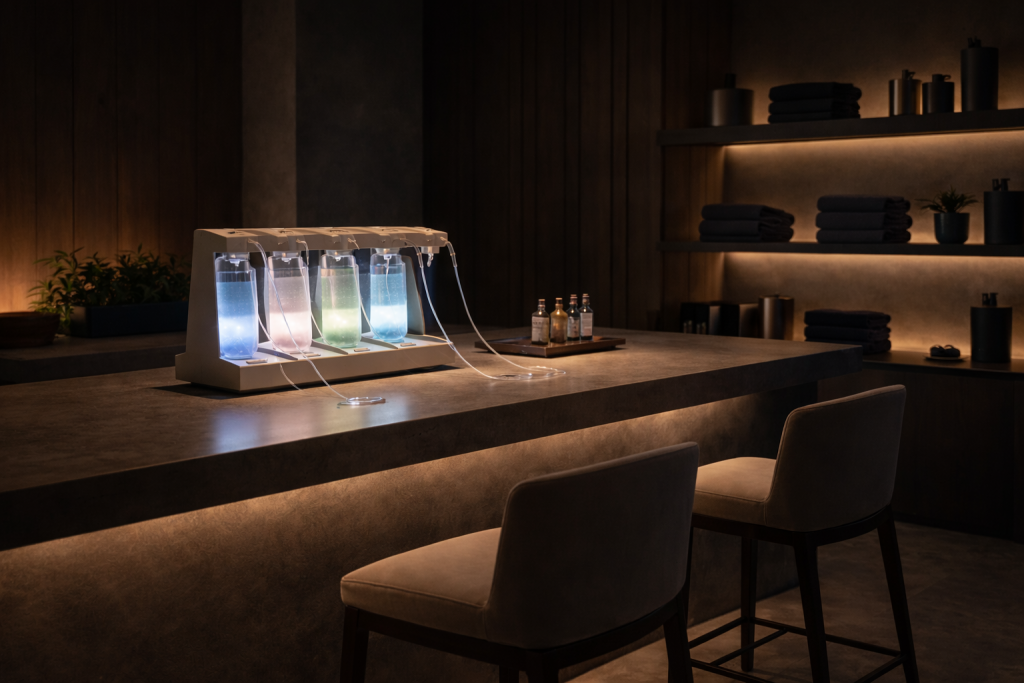
Digital illustration of the intended design and atmosphere. Final layouts and finishes may vary Why High Performers Track Reality, Not Feelings Why Feelings Distort Performance High performers often trust how they feel. This creates inconsistency. Energy can feel high even when recovery is poor. Fatigue can feel low even when the body is under stress. Hormones, sleep debt, and pressure distort perception. What feels right in the moment is rarely accurate over time. Data removes this distortion. It shows what is happening beneath the surface. It reveals patterns that feelings cannot detect. When performance is guided by data, decisions become stable. When guided by emotion, decisions fluctuate. This is why elite systems rely on measurement, not interpretation . Why Reactive Decisions Reduce Focus Most professionals respond to short-term signals. They push harder when they feel low. They rest when they feel tired. This creates cycles of overtraining and under recovery. These cycles weaken consistency. Focus becomes unstable because the system lacks structure. Measurement introduces structure. It shows trends instead of moments. It identifies decline early. It allows adjustment before performance drops. Focus improves because decisions are based on direction, not reaction. This creates control over output rather than chasing energy spikes . What High Performers Track Consistently High performers track few metrics. They do not track everything. They focus on what drives performance. Lean mass. Fat mass. Hydration. Symmetry. Rate of change. These metrics reflect adaptation and recovery. They do not react to daily changes. They track direction over time. This creates clarity. It removes noise. When the data shows progress, they stay consistent. When it shows decline, they adjust early. This approach protects both physical performance and cognitive output . Why Body Weight Misleads Decisions Body weight creates false signals. It hides muscle loss. It hides inflammation. It hides recovery decline. A stable weight can still reflect poor adaptation. A lower weight can reflect loss of strength. High performers who rely on weight alone misread progress. They restrict when they should recover. They push when they should adjust. This leads to stagnation. Objective body metrics remove this risk. They show composition, not just scale. This leads to precise decisions. Why Recovery Drives Cognitive Performance Focus is not only mental. It is physiological. When recovery declines, cognition declines. Reaction time slows. Decision quality drops. Emotional tolerance reduces. Many professionals blame workload. In reality, recovery often drives these changes. Measured recovery allows early correction. It shows when the system is under strain. It guides when to reduce load or increase recovery. This stabilizes performance. Focus becomes reliable because the body supports it, not fights it . How The Leela Vida Supports Measured Performance The Leela Vida is designed around measurement and structure. A dedicated body metrics environment provides consistent, objective tracking. Members do not rely on occasional checks. They build long-term data. This creates clarity and control. Everything is integrated. Train. Measure. Recover. Work. The system removes friction. It protects time. It supports discipline. Privacy ensures honest engagement with data. The environment removes noise and distraction. This allows high performers to operate with precision, consistency, and long-term stability.

Focus and Recovery Measured Read More »

Focus and Recovery Without Burnout

The Hidden Cost of High Performance High performers accept pressure as part of their identity. They train hard, work long hours, and push through fatigue. This approach works in the short term. Over time, it breaks the system. Cortisol stays elevated. Sleep quality drops. Cognitive clarity declines. You begin to lose precision in decisions, not effort. That is where burnout begins. Most professionals do not recognize burnout early. It does not start with exhaustion. It starts with subtle inefficiencies. Slower reaction times. Reduced focus in meetings. Less patience. Lower emotional control. These are performance leaks. They compound over weeks. The result is a drop in output quality while effort stays high. That is the worst position to be in. Data supports this pattern. Studies show sustained high cortisol reduces executive function and working memory. Recovery is not optional at this level. It is structural. If you do not design recovery into your routine, your system will force it through fatigue, illness, or mental withdrawal. High performance without recovery is unstable. Why Focus Breaks Down Focus is not a mindset. It is a biological state. It depends on glucose stability, nervous system balance, and environmental control. When these are misaligned, focus becomes inconsistent. Most professionals blame discipline. The real issue is system design. Digital overload is a major factor. Constant notifications fragment attention. Each interruption resets cognitive flow. It takes 15 to 25 minutes to regain deep focus after a disruption. Multiply this across a day. You lose hours of high-value output. This is not visible, but it is measurable. Environmental noise also plays a role. Public gyms, busy cafés, and open offices create cognitive friction. You expend energy filtering distractions. Over time, this reduces mental bandwidth for strategic thinking. Focus requires controlled environments. Not just intention. Nutrition and training patterns also affect focus. Low-carb states combined with high stress elevate cortisol. Irregular meal timing creates glucose spikes and crashes. Hard workouts without recovery increase nervous system load. These factors reduce your ability to sustain deep work. Focus becomes reactive instead of controlled. Recovery Is a Performance Tool Recovery is often treated as passive. It is not. It is an active process that restores the system. When done correctly, it increases output capacity. When ignored, it reduces it. This is a direct relationship. Cold exposure reduces inflammation and resets the nervous system. Red light therapy supports cellular repair and mitochondrial function. Infrared heat improves circulation and muscle recovery. These are not luxury features. They are performance tools. Sleep remains the foundation. Deep sleep drives hormonal balance and cognitive restoration. Without it, no strategy works. But sleep quality depends on daytime inputs. Stress levels, light exposure, and recovery protocols all influence sleep. You cannot fix sleep in isolation. Structured recovery also improves consistency. You maintain energy across the week instead of cycling between high output and collapse. This is critical for professionals managing teams, decisions, and financial responsibility. Consistency is more valuable than short bursts of intensity. The Burnout Cycle Burnout follows a predictable cycle. It starts with high motivation. You increase workload and training intensity. Recovery stays constant or decreases. Output initially rises. Then plateaus. Then declines. At this stage, most people push harder. They increase effort to compensate for reduced performance. This accelerates the decline. Sleep worsens. Stress increases. Decision quality drops. You begin to operate in a reactive state. Eventually, the system forces a reset. This may come as illness, injury, or mental exhaustion. You are forced to stop. Recovery takes longer because the system is depleted. This cycle repeats if the structure does not change. Breaking this cycle requires a shift in approach. You must treat recovery as a fixed input, not a variable. Training, work, and recovery must be balanced. Not equally, but strategically. The goal is sustained performance, not short-term output. Designing a Sustainable Routine A high-performance routine is structured. It is not flexible in the areas that matter. Timing, environment, and recovery protocols are fixed. This reduces decision fatigue and protects focus. Start with your morning. This is your highest-value window. No meetings. No distractions. Use this time for training, planning, and deep work. This aligns with how high performers structure their day. It protects cognitive capacity. Training should be controlled. Intensity is important, but so is frequency. Combine strength training with zone-based cardio. Avoid excessive high-intensity sessions. These increase stress load. Use recovery sessions to balance the system. Nutrition must support stability. Regular meal timing. Balanced macros. Avoid large fluctuations in blood sugar. This supports consistent energy and focus. Hydration also plays a role. Even mild dehydration reduces cognitive performance. Recovery protocols should be scheduled. Not optional. Cold exposure, sauna, and light therapy should be part of the routine. These tools accelerate recovery and improve resilience. Over time, this increases your capacity to handle stress. How The Leela Vida Supports This The environment determines behavior. Most spaces are not designed for focus or recovery. They are designed for volume. This creates friction for high performers. The Leela Vida removes this friction. The club is structured as a private, controlled environment. Membership is limited. This ensures no crowding, no waiting, and no noise. You enter a space designed for focus. This directly supports cognitive clarity and discipline. The integration of training, workspace, and recovery is critical. You move from gym to recovery to deep work without leaving the environment. This reduces transition time and maintains mental state. It supports flow. Recovery tools are built into the system. Red light therapy, cold plunge, and infrared sauna are available as part of the routine. These are not add-ons. They are part of the performance model. This aligns with the need for structured recovery. Workspace pods provide controlled environments for deep work. Sound isolation and limited access protect focus. This removes the cognitive load of managing distractions. You operate in a state of clarity. The community also matters. You are surrounded by individuals who value discipline and performance. This reinforces behavior. It creates alignment. You are not

Focus and Recovery Without Burnout Read More »

Focus Is the Missing Lever

Digital illustration of the intended design and atmosphere. Final layouts and finishes may vary Most people are not short on effort You already train. You follow a structured diet. You monitor your metrics and adjust when needed. On paper, everything appears aligned, yet results often move slower than expected. The constraint is rarely effort. It is fragmentation of attention. Your day is divided between multiple environments that compete for your focus. Notifications, noise, waiting, and unpredictable interruptions steadily erode the quality of your output. This affects both physical training and professional work. When focus breaks, intensity drops. When intensity drops, adaptation slows. Over time, this creates a gap between effort and results. High performers do not fail due to lack of knowledge or commitment. They fail because their attention is diluted across environments that are not designed to support sustained performance. Focus is a performance multiplier Focus changes the return on every hour you invest. One uninterrupted hour of deep work or training produces significantly higher output than several hours spent in a distracted state. In training, this shows through improved execution, better control, and stronger neurological engagement. In professional work, it shows through sharper thinking, faster decision making, and higher quality output. Over time, this creates compounding gains. Small improvements in daily focus lead to meaningful long term results. Executives understand leverage in financial terms. Focus is the same concept applied to performance. It increases output without increasing time. This is why individuals operating at a high level treat focus as a non negotiable asset rather than a passive state. The real problem is the environment Most environments are built for access and volume, not for performance. Public gyms prioritize throughput. Workspaces prioritize occupancy. Cafes prioritize turnover. These models introduce friction for anyone who values consistency and control. You deal with waiting times, noise levels, and constant variability. Each of these factors increases cognitive load. As cognitive load rises, your ability to remain present declines. This leads to shorter attention spans, reduced training quality, and fragmented work sessions. Over time, this creates inconsistency even for disciplined individuals. The issue is not a lack of discipline. It is the absence of an environment that supports it. High performers require spaces that remove friction, preserve energy, and protect attention. Focus requires structure, not motivation Motivation is unstable. It changes daily based on energy, stress, and external demands. Structure creates stability. When your day follows a predictable sequence, your system adapts. You reduce decision making. You remove uncertainty. This allows your mind to settle into a focused state more quickly. A structured routine creates clear transitions between training, work, and recovery. Each phase supports the next. This reduces mental fatigue and improves overall output. High performers rely on systems rather than motivation. They design their environment and schedule so that focus becomes the default state rather than something that requires effort. This approach produces consistent results over time because it is not dependent on how you feel on a given day. Why most routines break Even strong routines fail when friction accumulates. Small disruptions appear insignificant in isolation but compound over time. Waiting for equipment interrupts training flow. Noise during calls reduces work quality. Limited access to recovery delays physical adaptation. These interruptions break rhythm. Once rhythm is broken, consistency declines. Over several weeks, this leads to reduced progress despite continued effort. Many individuals interpret this as a personal failure, but the root cause is environmental. Focus depends on continuity. Without continuity, even the most disciplined routine becomes difficult to sustain. The difference between progress and stagnation often comes down to how well your environment protects your ability to stay in a consistent flow state. How The Leela Vida supports focus The Leela Vida is designed as a controlled performance environment where focus is protected at every stage of the day. Membership is intentionally limited to remove crowding, waiting, and unpredictability. This creates immediate access to equipment, space, and services without disruption. The gym environment is structured for uninterrupted training, allowing you to maintain intensity and rhythm throughout your session. The workspace pods are sound isolated, enabling deep work without distraction, which is essential for professionals managing high level responsibilities. The recovery suite is integrated within the same environment, allowing immediate transition after training without logistical friction. This creates a seamless flow where training, work, and recovery exist within a single controlled system. By removing external noise and reducing decision fatigue, the environment lowers cognitive load and supports sustained focus throughout the day. You are not deciding where to go next or adapting to unpredictable conditions. You move through a structured sequence that supports performance. Over time, this leads to higher output, better physical results, and improved mental clarity. This reflects the core principle of the brand. Focus is not left to chance. It is built into the environment and reinforced through design, structure, and membership discipline.

Focus Is the Missing Lever Read More »

LAP POOL IN BARBADOS: Built for Discipline, Not Leisure

Infinity lap pool in Barbados at Leela Vida overlooking the ocean, designed for disciplined swimming and focused training

Illustration for conceptual purposes. Actual facilities and experiences at The Leela Vida may vary. The Problem with Leisure Pools Most pools in Barbados are designed for relaxation. They are wide, shallow, and social by design. They prioritize visual appeal over function, and while they serve a purpose within resorts and residential settings, they do not support structured training. When you enter a leisure pool, there is no defined flow, no rhythm, and no expectation of performance. You float, you move casually, and you leave without any measurable outcome. For a high-performing individual, this creates friction because the environment does not support consistency. There are no lanes, no pace control, and constant interruptions from other users. Over time, this leads to abandonment of swimming as a serious form of training. The issue is not with swimming itself. The issue is with the environment in which it takes place. A lap pool corrects this by removing variability and introducing structure, turning swimming into a repeatable and disciplined activity rather than a casual one. The 50-Foot Standard A true lap pool is built around function, not aesthetics, and the 50-foot length is a critical design decision. This length allows for sustained movement, enabling swimmers to establish rhythm and maintain consistent breathing patterns without frequent interruptions. Shorter pools force constant turning, which disrupts flow and reduces training efficiency. In a 50-foot pool, each lap becomes part of a structured sequence, allowing for measurable intervals and progressive improvement. This is where swimming transitions from a passive activity into a performance tool. The body adapts to consistency, and the pool must support that adaptation. The strategy behind the Leela Vida design explicitly positions the lap pool as a space for disciplined aquatic training rather than leisure . This distinction ensures that every element of the pool supports output, not distraction, aligning the physical environment with the expectations of individuals who value precision and control. Discipline Through Environment High performance is rarely driven by motivation alone. It is driven by environment. A properly designed lap pool removes decision-making and replaces it with structure. You arrive, enter your lane, and begin. There is no ambiguity and no need to think about what to do next. This creates a controlled training loop where actions become automatic over time. Warm-up, intervals, recovery, and exit all follow a predictable sequence. This repetition builds discipline without requiring effort. Most fitness environments fail because they rely on willpower, which is inconsistent. A disciplined environment eliminates that dependency. The Leela Vida brand is built around clarity, focus, and personal growth, values that directly support this approach . The lap pool becomes more than a facility feature. It becomes a behavioral tool that reinforces consistency and removes friction from the training process. Integration with Recovery The advantage of a lap pool increases when it is integrated into a complete performance system. Swimming alone provides cardiovascular benefit, but when combined with immediate recovery protocols, the effect is amplified. After structured swim intervals, the body is in a heightened state of stress and adaptation. Transitioning directly into cold exposure reduces inflammation, while heat exposure improves circulation and mobility. Red light therapy supports cellular repair, creating a complete cycle of stress and recovery. This integrated approach is defined in the broader strategy as a unified performance ecosystem rather than isolated amenities . For professionals with limited time, this matters. It compresses multiple health inputs into a single, efficient session. Instead of separating training and recovery across different locations or times of day, everything happens in sequence, increasing adherence and long-term results. The Psychological Shift There is a clear psychological shift that occurs when training in a structured lap pool. Swimming is no longer perceived as a casual activity. It becomes a disciplined practice defined by sets, timing, and measurable output. This shift changes behavior. When activities are measurable, they become repeatable. When they are repeatable, they become habits. This is critical for individuals who operate at a high level in their professional lives, where structure and systems drive results. The same principles apply to physical performance. The lap pool introduces a framework that mirrors how successful individuals already operate. It removes randomness and replaces it with intention. This is why such environments appeal strongly to high-income professionals who prioritize efficiency and reduced cognitive load in their daily routines . The pool becomes a space where performance is expected, not optional. Built for a Different Standard A lap pool designed for discipline will always feel different from a traditional pool. It is quieter, more structured, and intentionally less social. This is not a limitation. It is a signal. It communicates that the space is designed for individuals who value focus, consistency, and progress. Every element of The Leela Vida is aligned to this standard, from membership structure to facility design. The lap pool reinforces this positioning by supporting a specific type of behavior. It is not built to accommodate everyone. It is built to support those who approach their health with the same level of discipline they apply to their work. This alignment between environment and user is what creates long-term value. When someone steps into a space designed for performance, they adjust their behavior to match it. Over time, that behavior becomes identity. The lap pool is not just a feature. It is a standard that defines the entire experience.

LAP POOL IN BARBADOS: Built for Discipline, Not Leisure Read More »

Private Workspace Pods in Barbados for Focused Work

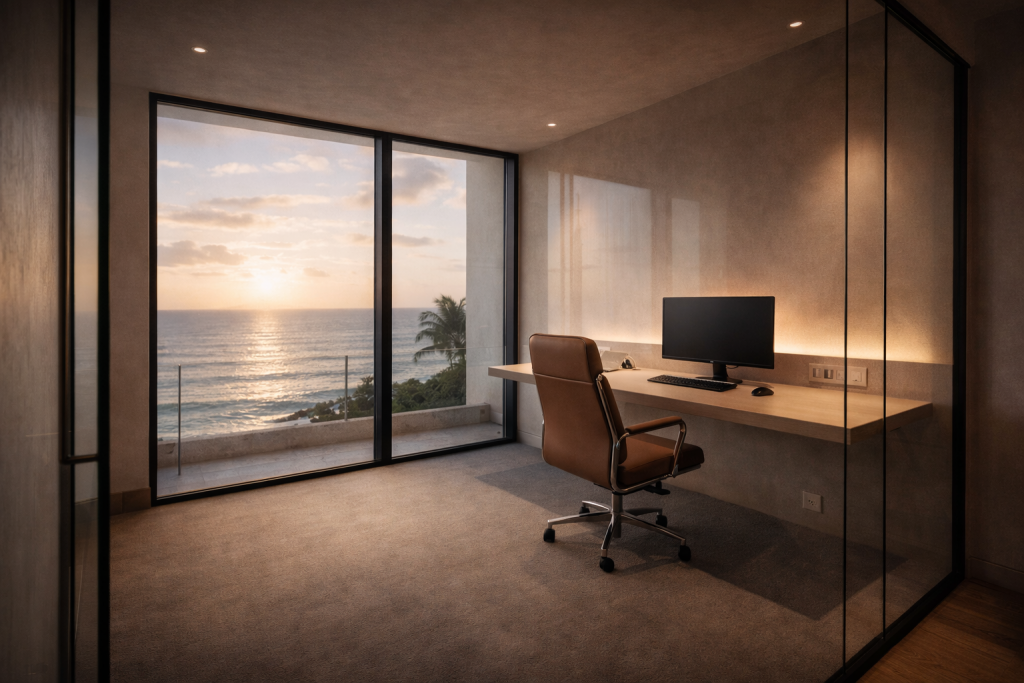
Illustrative rendering. Design, finishes, and configuration subject to change. Focus Is the Constraint Professionals do not lack ambition or discipline. They lack uninterrupted time. The modern workday is fragmented by notifications, conversations, and constant context switching. Each interruption reduces cognitive depth and extends the time required to complete meaningful work. Over a full day, this creates a measurable decline in decision quality and execution speed. In Barbados, this issue is amplified by the absence of environments designed for sustained concentration. Cafés, villas, and shared offices introduce variables that disrupt focus without being obvious. The result is longer working hours with lower output. High performers recognize that focus is not managed through effort. It is protected through environment. Environment Drives Output Cognitive performance responds directly to surroundings. When visual movement, background noise, and unplanned interaction are removed, the brain shifts into deeper states of concentration. This is where strategic thinking, complex problem solving, and high-value decisions occur. Most workspaces fail because they prioritize activity over clarity. They are designed to accommodate people, not to protect output. In contrast, a controlled environment reduces sensory input and allows sustained attention. This changes how work is experienced. Tasks that would normally take hours are completed with precision in less time. For executives and remote professionals operating across time zones, this shift is critical. It allows them to maintain performance without extending their working day. Not Coworking. Private by Design Shared workspaces introduce unpredictability. Noise levels vary. Behavior varies. Expectations vary. This creates an environment where focus depends on tolerance rather than structure. The Workspace Pods are built on the opposite principle. They are enclosed, private, and visually calm. There is no ambient conversation. No movement behind screens. No expectation of interaction. Each pod functions as a contained environment where attention is protected from entry to exit. This distinction matters. It separates casual work environments from performance environments. Professionals who require precision do not need social energy. They need controlled isolation. Designed for Deep Work Every detail inside the Workspace Pods serves concentration. Layout remains minimal. Surfaces stay uncluttered. Lighting is neutral and controlled. Seating supports posture for extended sessions without fatigue. Work surfaces allow multiple devices without congestion. Nothing competes for attention. Nothing introduces friction. Technology remains stable and immediate, with high-speed connectivity and no setup delay. This removes the typical start-stop pattern seen in most work environments. Work begins immediately and continues without interruption. The environment does not stimulate. It stabilizes. This allows professionals to sustain high-quality output across defined work blocks. Privacy and Time Control Senior professionals require confidentiality. Conversations involve sensitive information. Screens display critical data. In shared environments, privacy is compromised by proximity alone. The Workspace Pods remove this risk completely. Sound remains contained. Visibility is controlled. Each session operates within a reserved time block, which ensures availability and eliminates competition for space. This structure respects time and removes uncertainty from the working day. Professionals know when they will work, where they will work, and the conditions in which that work will occur. This predictability allows them to plan with precision and execute without disruption. The Leela Vida System The Workspace Pods are not standalone. They sit within a structured system where work, training, and recovery are integrated. Members move through a controlled daily sequence. Training clears cognitive fatigue. Focused work follows in a protected environment. Recovery consolidates performance and prepares the body for the next cycle. This structure removes the need to transition between multiple locations, which reduces friction and preserves time. The Leela Vida is designed as a performance system, not a gym. The Workspace Pods form the central layer of that system by protecting attention and enabling high-quality output within a disciplined environment.

Private Workspace Pods in Barbados for Focused Work Read More »

The Executive Room

Digital illustration of the intended design and atmosphere. Final layouts and finishes may vary The Executive Room at The Leela Vida exists to support one outcome. Clear thinking that leads to decisive action. This is not a shared boardroom and it is not a public venue. It operates within a controlled membership environment designed for senior professionals who value privacy, structure, and efficiency. Every element of the room reflects how high-level work happens in practice. Leaders do not need more space or more features. They need an environment that removes friction, reduces noise, and protects attention. The Leela Vida has designed the Executive Room around this principle so that when you enter, your focus sharpens and your time is used with intent. A Private Environment for Serious Work Senior-level work breaks down in open environments. Noise enters from movement, conversation, and unfamiliar people. Attention shifts without control and energy disperses across the room. This slows decisions and weakens outcomes. The Executive Room removes these variables entirely. When you sit inside the space, there are no external distractions competing for your attention. Conversation becomes direct and controlled. Sensitive topics are addressed earlier and with more clarity. This leads to faster alignment and stronger decisions. The Leela Vida has built this environment specifically to match how executives operate when results matter, ensuring that every meeting serves a defined purpose and produces a measurable outcome. Membership-Led Access Only Access defines the quality of any environment. The Executive Room is not available for general hire because a public model introduces inconsistency. Unknown users bring different standards, different expectations, and different levels of discipline. This disrupts the environment and reduces its effectiveness. At The Leela Vida, only members reserve the room and only members host meetings. Guests attend under that member’s control. This creates a consistent standard across every session. You know who enters the space. You control the agenda and the tone. You maintain confidentiality without compromise. This structure aligns with the club’s invitation-only philosophy and its strict membership cap, ensuring that the environment remains stable and trusted at all times. Capacity Designed for Decisions The Executive Room is limited to fifteen people for a specific reason. This number supports direct communication and full participation without dilution. Larger groups create distance and reduce accountability. People disengage and conversations become fragmented. In a smaller, controlled setting, every individual contributes and every point is heard. Eye contact remains natural and dialogue stays focused. Silence also becomes productive, allowing time for reflection without pressure. The Leela Vida has structured this capacity to ensure that meetings do not become passive discussions. Instead, they remain active, engaged, and outcome-driven, where responsibility is clear and next steps are defined before the session ends. Integrated with Training and Recovery The Executive Room is not an isolated feature. It is part of a broader performance system inside The Leela Vida. Members move from training to meetings and then into recovery without leaving the environment. This sequence has a direct impact on performance. Physical training reduces mental noise and prepares the mind for focused work. Meetings then occur with greater clarity and sharper thinking. Recovery stabilizes energy levels and prevents fatigue after high-level decision-making. This integrated model removes the need to move between locations and eliminates time lost to travel and transitions. The Leela Vida creates a continuous flow where your physical state and cognitive output remain aligned throughout the day, supporting consistent high performance. Designed Without Distraction The design of the Executive Room is deliberate and restrained. Every element exists to support focus and nothing exists to compete with it. Furniture supports posture during extended sessions, ensuring comfort without reducing alertness. Lighting is calibrated to reduce fatigue and maintain concentration over long periods. Acoustics allow low-volume discussion without strain, creating a calm and controlled atmosphere. Technology functions immediately and reliably, removing delays that disrupt momentum. There are no unnecessary features or visual distractions. The space remains clean, structured, and intentional. This allows you to stay fully engaged in the work taking place, without interruption or adjustment. The Leela Vida Standard for Executive Work Most environments host meetings. Very few are designed to support decisions. The Executive Room at The Leela Vida focuses entirely on outcomes. You enter with a defined objective and you leave with clear direction, assigned responsibility, and structured next steps. Time is respected and used efficiently. The environment supports discipline, not activity. This is why access remains controlled, capacity remains limited, and standards remain consistent. The Leela Vida treats professional work with the same level of structure and precision as physical training. This alignment creates an environment where performance is sustained across every aspect of your day.

The Executive Room Read More »

Gyms in Barbados: Smarter Performance Through Rhythm

Digital illustration of the intended design and atmosphere. Final layouts and finishes may vary. What Most Gyms in Barbados Get Wrong Most gyms in Barbados are built around access, not performance. They focus on equipment, class schedules, and membership volume. This works for the general market, but it fails the professional who values consistency. You arrive and adjust. You wait for equipment. You shift your session based on what is available. You leave without a clear flow. Training becomes reactive instead of structured. Even at higher-end facilities, the model remains fragmented. You train in one place, recover somewhere else, and work somewhere else again. Each transition adds friction. Over time, that friction breaks consistency. This is the real issue. It is not lack of discipline. It is lack of structure. The Barbados market reinforces this pattern, where even premium gyms operate at a fraction of the level required for high-performance routines, often priced around BD$292 to BD$350 per month and designed for access rather than integrated output. Why Rhythm Drives Real Performance High performance is built on rhythm, not intensity. Rhythm means repeatability. You know how the day starts. You know where you go. You know what happens next. You remove negotiation from your routine. The body responds immediately to this predictability. Energy stabilizes. Recovery improves. Focus extends. This is where results compound. You do not waste time deciding when to train or where to go. You do not delay recovery. You do not shift meals. Everything happens in sequence. Rhythm reduces decision fatigue and protects mental clarity. High performers do not chase variety. They protect structure. They understand that consistency over time delivers better outcomes than occasional intensity. This is the difference between maintaining performance and constantly rebuilding it. Why Barbados Requires a Different Model Barbados is no longer just a leisure destination. It is now home to executives, founders, and remote professionals operating at a high level. This group does not struggle with motivation. They struggle with cognitive load. Their days are already complex. They manage teams, decisions, and responsibilities across time zones. They do not want their personal routine to add more decisions. Traditional gyms require planning. You decide when to train. You decide when to recover. You decide where to work. You decide what to eat. Each decision drains attention. By midday, your system is already fatigued. Not physically, but mentally. This is why the modern professional in Barbados requires integration. Training, recovery, work, and nutrition must sit in one environment. This is not convenience. It is a requirement for sustained output. The rise of high-income remote professionals on the island has made this shift clear. They expect environments that reduce friction and support structured days. Why Intensity Alone Fails Over Time Intensity creates short-term results. Hard workouts, long days, and compressed schedules can drive progress for a period. Then performance declines. Sleep becomes inconsistent. Recovery gets delayed. Mental sharpness drops. The system cannot sustain the load. Intensity creates peaks, but peaks require recovery. Without rhythm, recovery becomes inconsistent. High performers do not want peaks and crashes. They want steady output. They want days that feel structured and repeatable. This allows effort without exhaustion. It allows ambition without burnout. The mistake most professionals make is assuming they need to push harder. The reality is different. They need to remove friction and protect structure. Rhythm replaces volatility with consistency. That is where long-term performance lives. The Hidden Cost of Fragmented Environments Fragmented environments force constant adjustment. You wake up and negotiate your day. You decide when to train. You delay recovery. You shift meals around meetings. Each adjustment costs cognitive energy. By the middle of the day, your system feels heavy. Not because of workload, but because of constant reorientation. This shows up in subtle ways. Training sessions get shortened. Recovery gets skipped. Work extends into the evening. Over time, results decline. The issue is not discipline. The issue is design. High performers do not rely on willpower. They design environments that carry structure for them. When everything is separated, rhythm breaks. When everything is integrated, rhythm becomes automatic. Why Integrated Environments Outperform An integrated environment removes transitions. You arrive once, and the day flows. Training happens immediately. Recovery follows without delay. Work continues without interruption. Food is available without planning. The body stays in a consistent state. The mind stays focused. This continuity is what drives performance. It reduces the need to reset. Fewer resets mean more consistency. More consistency means better outcomes. This is why private, controlled environments outperform traditional gyms for high-level professionals. They are not designed for volume. They are designed for flow. The goal is not to do more. The goal is to maintain structure across the entire day. How The Leela Vida Supports Rhythm The Leela Vida was built around this principle. It is not positioned as a gym. It is a daily operating environment. Membership is capped at 150. This is a structural decision, not a marketing one. It ensures no waiting, no crowding, and no disruption. Every element is designed to reduce friction. You arrive once. Training begins immediately. Recovery follows without interruption. Workspaces are available without relocation. Food is served without decision-making. The environment carries the rhythm. This aligns directly with the broader strategy of reducing cognitive load and integrating performance, recovery, and productivity into one system. The value is not in individual services. It is in the removal of fragmentation. For the target member, this replaces multiple environments with one structured flow. Why This Matters to the Target Market The Leela Vida is designed for a specific profile. Executives, founders, senior professionals, and long-stay residents who value privacy and structure. These individuals do not want noise or unpredictability. They want consistency. They want environments that feel the same every day. This creates trust. When the environment is stable, performance becomes stable. They do not need motivation. They need reliability. They want to remove unnecessary decisions and focus on output. This is why they choose controlled environments

Gyms in Barbados: Smarter Performance Through Rhythm Read More »

The Privilege of Privacy

Digital illustration of the intended design and atmosphere. Final layouts and finishes may vary Privacy as Performance Advantage High performers do not struggle with motivation. They struggle with interference. Noise, waiting, crowded environments, and unpredictable routines break consistency. Most gyms in Barbados operate on volume. This creates friction at every step. Equipment is occupied. Spaces are shared. Attention is fragmented. Over time, this erodes discipline. Privacy removes this friction. When you train in a controlled environment, your routine becomes stable. You move from reactive to deliberate. There is no negotiation with your schedule. No compromise on intensity. No dilution of focus. This is not a luxury feature. It is a performance requirement. The Leela Vida is structured around this principle. The 150-member cap is not a marketing tactic. It is an operational decision to protect consistency. You arrive, you train, you recover, you work. Without interruption. The Cost of Public Environments Most professionals underestimate the cost of shared environments. It is not financial. It is cognitive. Every delay, every distraction, every adjustment consumes attention. Over time, this compounds into weaker sessions, reduced output, and inconsistent routines. You wait for a machine. Your heart rate drops. Your session extends. You rush the final sets. Recovery is compromised. The next day starts with less energy. This pattern repeats. The same applies to workspace. Noise, movement, and interruptions reduce output quality. You spend more time to achieve less. This is the hidden cost of public environments. High performers begin to recognize this pattern. They stop optimizing workouts and start optimizing environments. Privacy becomes a filter. Not everyone needs it. But those operating at a high level cannot function without it. The Leela Vida removes these variables. No waiting. No congestion. No excess traffic. The environment is stable. This stability protects both physical output and cognitive performance. Scarcity Creates Value Unlimited access environments create unlimited noise. Scarcity creates control. When access is limited, behaviour changes. People respect the space. The environment remains calm. Standards are maintained. The 150-member cap defines this structure. It ensures that every member experiences the same level of access and privacy. There is no peak-time pressure. No overcrowding cycles. No degradation of service over time. This is why high-performing individuals choose private clubs. Not for status. For predictability. They know what they will get every time they walk in. That certainty allows them to build routines that compound. Scarcity also creates alignment. Members are not random. They are selected. Executives, founders, professionals. People who value time, discipline, and discretion. This creates a peer environment that reinforces behaviour. The result is simple. You train harder. You focus deeper. You stay consistent longer. The Psychology of Quiet Spaces Performance is not only physical. It is mental. The environment you operate in shapes your internal state. Loud, busy spaces increase stress signals even when you are not aware of it. Your system is reacting constantly. Quiet spaces reduce this load. Your nervous system settles. Focus increases. Decisions become clearer. This applies to both training and work. This is why high-end environments are designed with restraint. Minimal noise. Clean layouts. Controlled movement. Every detail reduces cognitive demand. The Leela Vida is built on this principle. It is not designed to stimulate you. It is designed to stabilize you. This allows you to generate your own intensity when needed. You do not rely on the environment to push you. The environment supports you. Integration of Training and Work The modern professional does not separate fitness and work. They integrate both into a single system. Train. Recover. Work. Repeat. Public gyms and traditional offices force separation. You move between locations. You lose time. You break flow. This creates inefficiency. The Leela Vida removes this separation. You train in a private gym. You transition directly into recovery. You move into a soundproof workspace. All within one controlled environment. This integration increases output. You maintain momentum. You reduce transition time. You protect focus. Workspace pods are structured for deep work. No interruptions. No noise. No visual distractions. This allows you to operate at a higher cognitive level for sustained periods. This is not convenience. It is performance design. Why Barbados Is Shifting Barbados is evolving. The island is attracting high-income professionals, remote executives, and long-term residents who require more than lifestyle. They require structure. These individuals are not looking for busy gyms or social environments. They are looking for control, privacy, and efficiency. The traditional model does not serve them. Hotels provide comfort but not performance. Public gyms provide access but not consistency. Coworking spaces provide flexibility but not focus. This gap is now clear. The demand is for integrated, private environments that support both physical and cognitive output. The Leela Vida sits directly in this shift. It is not competing with gyms. It is defining a new category. Membership is structured as a filter. Not everyone enters. Only those aligned with the environment. This ensures the experience remains intact over time. The Outcome Privacy changes behaviour. When you remove friction, you increase consistency. When you increase consistency, you improve results. You train more effectively. You recover properly. You work with focus. Over time, this compounds into measurable outcomes. Most people focus on programs, sets, reps, and diets. These matter. But they are secondary to environment. If your environment is unstable, your results will remain inconsistent. The Leela Vida is built to solve this at the highest level. A controlled, private environment where performance becomes repeatable. This is the privilege of privacy.

The Privilege of Privacy Read More »

Decision Fatigue and Performance

Digital illustration of the intended design and atmosphere. Final layouts and finishes may vary The Hidden Cost of Too Many Choices High performers rarely fail because of lack of effort. They fail because of cognitive overload. Every decision you make during the day draws from a finite mental reserve. Small decisions seem harmless, but they accumulate. What to eat, when to train, where to work, how to structure your day. Each one consumes attention. Over time, this reduces your ability to make clear, high-value decisions. This is why many professionals feel sharp in the morning and scattered by late afternoon. The issue is not time. It is decision load. The modern environment forces constant choice. Most of it is unnecessary. This creates a silent erosion of performance that goes unnoticed until discipline starts to break. Decision Fatigue Reduces Discipline Discipline is not fixed. It fluctuates based on mental energy. When your decision capacity drops, your standards drop with it. You skip sessions. You delay work. You default to easier options. This is not a character issue. It is a system failure. By the time the evening arrives, your brain has processed hundreds of inputs. Messages, emails, conversations, small choices. Your ability to hold structure weakens. This explains why routines fail later in the day. The problem is not motivation. The problem is accumulated fatigue from constant decision-making. Without controlling this, consistency becomes unpredictable. Environment Determines Outcomes Your environment dictates how many decisions you are forced to make. Most environments are chaotic. Public gyms are crowded. Workspaces are noisy. Food options are excessive. Each of these adds friction. You are constantly adjusting, choosing, reacting. This drains focus. High-performance environments operate differently. They reduce choice. They simplify flow. They remove unnecessary variation. At The Leela Vida, the structure is intentional. Membership is capped to prevent congestion and preserve space. The layout supports a clear sequence. Train. Recover. Work. You do not spend energy navigating options. The environment handles that for you. This preserves mental clarity. High Performers Operate on Systems, Not Choices The most effective professionals do not rely on constant decision-making. They rely on systems that remove the need to decide repeatedly. A system creates predictability. It reduces variation. It protects energy. Fixed routines are not restrictive. They are efficient. When your meals, training times, and work structure are predefined, your brain operates with less friction. This allows deeper focus. Without systems, every day becomes reactive. You spend more time deciding than executing. Over time, this leads to inconsistent output. Structure is not about control. It is about preserving cognitive capacity for the decisions that matter. Cognitive Load Impacts Performance and Health Decision fatigue does not only affect productivity. It affects your physiology. When cognitive load increases, stress markers rise. Cortisol increases. Focus drops. Recovery slows. You become more reactive and less precise. This has a direct impact on training quality, sleep, and overall health. Professionals often attempt to solve this with more effort, but this compounds the problem. The issue is not effort. It is overload. Reducing decisions improves both mental clarity and physical outcomes. When your system is simplified, your body responds better. Training becomes sharper. Recovery improves. Sleep stabilizes. This is a direct result of reduced mental strain. How The Leela Vida Removes Decision Fatigue The Leela Vida is designed to eliminate unnecessary decisions. The environment is controlled. The membership is limited. The services are integrated. You do not need to choose between locations, schedules, or setups. Everything is structured to support a seamless routine. The café menu is intentionally limited to reduce friction. The workspace pods operate on block systems to maintain focus. The recovery suite is positioned to follow training without disruption. This is not convenience. It is performance design. The goal is simple. Reduce cognitive load so you can operate at a higher level. When decisions are minimized, clarity returns. When clarity returns, performance becomes consistent.

Decision Fatigue and Performance Read More »